

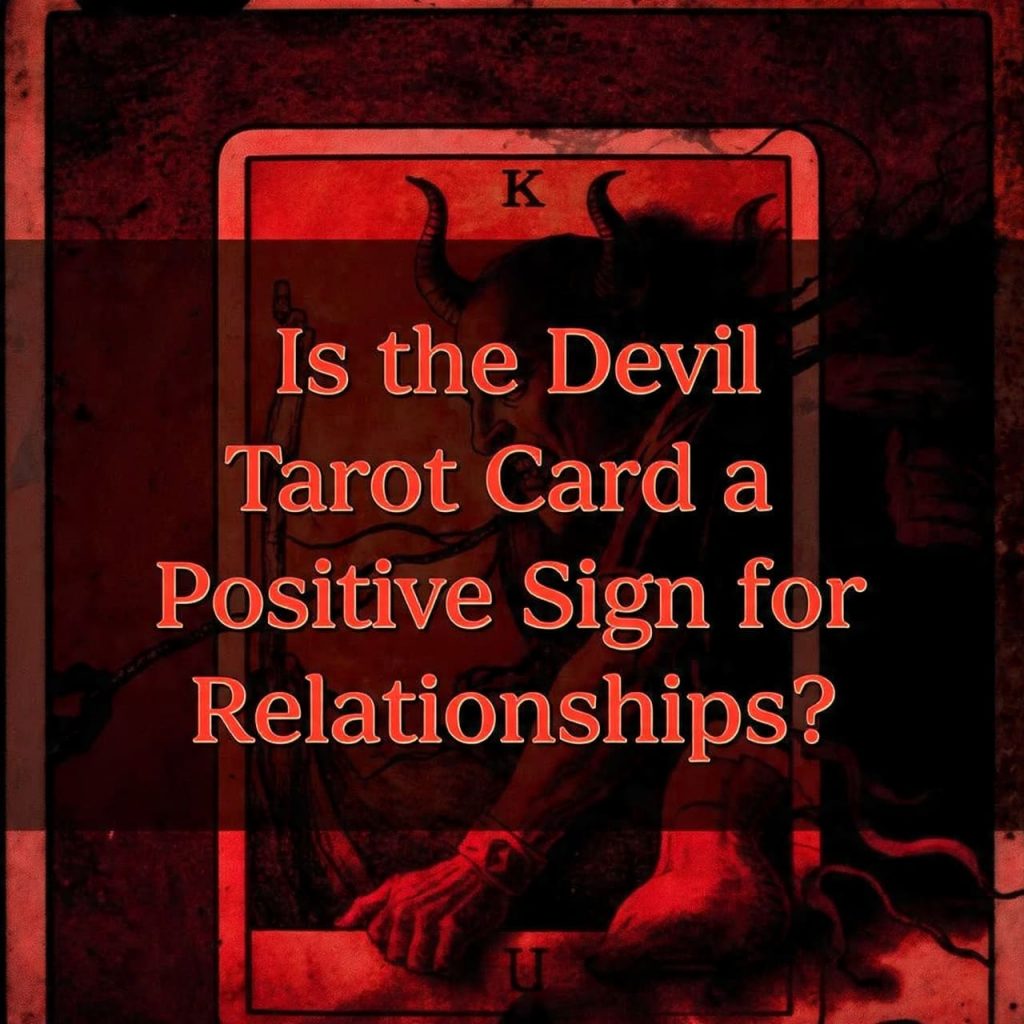
According to Astroideal experts, Few tarot cards provoke as much discomfort in relationship readings as the Devil. Its imagery—chains, shadow, and perceived loss of control—often leads people to assume it represents toxicity, obsession, or inevitable harm. When the Devil appears in questions about relationships, the instinctive reaction is frequently fear rather than curiosity. Yet experienced practitioners often caution against reading this card at face value.

💜 Need a clear answer right now?
CONSULT THE YES OR NO TAROT Free · No registration · Instant resultMany believe the Devil tarot card does not exist to condemn relationships but to expose the forces influencing them. These forces may include desire, fear, attachment, or unexamined patterns. Using interpretive strategies commonly discussed in analytical resources such as cards meanings, readers often approach the Devil as a card of awareness rather than judgment.
This article explores whether the Devil tarot card can be a positive sign for relationships, offering a balanced, credible explanation that emphasizes insight, responsibility, and emotional maturity rather than absolutes.
Core Symbolism of the Devil in Relationship Readings
Attachment and Emotional Bonding
At its core, the Devil represents attachment. In relationships, many practitioners interpret this as intense emotional or physical bonding that feels powerful and consuming. This attachment can be pleasurable, stabilizing, or problematic depending on awareness and balance.
Rather than labeling attachment as inherently negative, the Devil highlights its presence and influence.
Desire, Chemistry, and Instinct
Another key theme of the Devil is desire. In relationship contexts, this often points to strong chemistry, sexual attraction, or instinctive pull. Many believe this card reflects raw connection rather than refined emotional intimacy.
This can be positive when acknowledged consciously, and destabilizing when denied or misused.
Power, Control, and Choice
The Devil is also associated with power dynamics. In relationships, this may involve control, dependency, or fear of loss. Importantly, practitioners often emphasize that the chains in the Devil card are loose—symbolizing choice rather than imprisonment.
Awareness restores agency under this card.
Upright Devil: Relationship Meanings Explained
Intense Attraction and Emotional Magnetism
When the Devil appears upright in relationship readings, many practitioners interpret it as a sign of strong attraction. This connection may feel irresistible, emotionally charged, or difficult to ignore.
Such intensity can deepen connection when handled responsibly.
Confronting Unhealthy Patterns
The upright Devil frequently signals the need to confront unhealthy patterns. These may include jealousy, manipulation, emotional dependency, or avoidance of deeper issues.
Practitioners often view this as an opportunity for growth rather than a warning of doom.
Honesty About Needs and Desires
Another important interpretation involves honesty. The Devil may appear when individuals are avoiding acknowledging their true needs, desires, or fears within the relationship.
Facing these truths can strengthen the relationship if approached maturely.
Reversed Devil: Liberation and Emotional Awareness
Breaking Free From Limiting Attachments
When reversed, the Devil is often interpreted as liberation. In relationships, this may indicate breaking free from unhealthy dynamics, compulsive attachment, or fear-based bonding.
This shift often brings relief and clarity.
Increased Emotional Responsibility
A reversed Devil can also suggest growing emotional responsibility. Individuals may begin recognizing where they gave power away or acted from fear rather than choice.
Practitioners often see this as a positive step toward healthier connection.
Redefining Desire and Connection
Rather than rejecting desire, the reversed Devil often reflects redefining it. Relationships may move from compulsion toward conscious choice.
This transition is often seen as a sign of emotional maturity.
Relationship Contexts Where the Devil Commonly Appears
Passion-Driven Relationships
The Devil frequently appears in relationships driven by passion and chemistry. These connections can be deeply fulfilling but require boundaries and awareness.
Many practitioners emphasize balance rather than suppression.
Codependency and Emotional Entanglement
In more challenging contexts, the Devil may highlight codependency. This does not mean the relationship is beyond repair, but it does indicate a need for honest evaluation.
Recognition is the first step toward change.
Long-Term Relationships With Hidden Dynamics
The Devil can also surface in long-term relationships where patterns have gone unexamined. Habit, comfort, or fear may replace conscious choice.
The card invites awareness rather than immediate action.
When the Devil Can Be a Positive Sign for Relationships
Awareness Leads to Empowerment
Many believe the Devil becomes positive when it brings awareness. Recognizing attachment, desire, or control allows individuals to reclaim choice.
Without awareness, patterns persist unconsciously.
Deepening Intimacy Through Honesty
The Devil can support deeper intimacy when partners are willing to discuss uncomfortable truths. Honest conversations about needs, boundaries, and fears often strengthen connection.
Practitioners frequently emphasize communication here.
Transforming Shadow Into Strength
Rather than rejecting shadow aspects, the Devil encourages integration. Accepting human complexity—desire, fear, imperfection—can foster authenticity in relationships.
This perspective reframes the card as transformative.
Seeking Ethical Perspective in Complex Relationships
When Emotional Intensity Feels Confusing
Devil-related relationship readings can feel overwhelming. Some individuals seek reflection from qualified professionals who interpret tarot responsibly, helping distinguish passion from compulsion.
Such guidance often emphasizes agency and emotional safety.
Desire and Emotional Truth in Romantic Readings
The Devil frequently appears in love tarot readings when attraction is strong but clarity is lacking. Practitioners often stress that desire is not inherently harmful, but it must be understood.
This helps avoid fear-based conclusions.
Practical Relationship Guidance When the Devil Appears
Reflective Steps Commonly Suggested
When the Devil arises in relationship readings, practitioners often recommend thoughtful reflection:
- Identifying emotional or behavioral patterns
- Assessing where fear or desire influences decisions
- Reclaiming personal agency and boundaries
Potential Benefits of Working With Devil Energy
When approached consciously, many believe the Devil can support:
- Stronger self-awareness
- Healthier boundaries
- More honest intimacy
Choosing Balanced Interpretive Support
Because the Devil can be misinterpreted, practitioners often suggest consulting reliable readers who avoid fear-based narratives and emphasize empowerment.
Comparing Relationship Dynamics Under the Devil
| Relationship Dynamic | Devil Influence | Potential Outcome |
|---|---|---|
| Conscious passion | Integrated | Deep connection |
| Unexamined attachment | High | Emotional strain |
| Awareness and release | Reversed | Healthier balance |
Modern Relationship Readings and Accessibility
Digital Tarot for Reflective Exploration
With access to online tarot sessions, individuals exploring complex relationship dynamics can reflect privately and thoughtfully, rather than reacting emotionally.
These formats often support clarity over urgency.
Visual and Voice-Based Reading Options
Some people prefer video readings for nuanced emotional discussion, while others feel more comfortable with phone readings when processing sensitive relationship topics discreetly.
Selecting a comfortable format can support honest exploration.
Timing, Cycles, and Relationship Awareness
The Devil and Emotional Timing
The Devil is less about timing and more about readiness. Practitioners often interpret its appearance as signaling that awareness must occur before change is possible.
Transformation follows recognition.
Integrating Broader Emotional Cycles
Some readers contextualize Devil-related relationship insights alongside horoscope insights to reflect broader cycles influencing desire, attachment, and self-awareness.
As understanding deepens, practitioners often revisit symbolic frameworks using cards meanings to reassess relationship patterns over time.
Frequently Asked Questions
Is the Devil tarot card always negative for relationships?
No. Many believe it highlights attachment and desire rather than predicting harm.
Can the Devil indicate love?
Yes, particularly intense or passionate love, though awareness is essential.
What does a reversed Devil mean in relationships?
It often suggests liberation from unhealthy patterns or growing awareness.
Does the Devil mean a relationship is toxic?
Not necessarily. It points to dynamics that need conscious examination.
Can the Devil be a positive sign?
Yes, when it leads to honesty, self-awareness, and choice.
Should relationship readings be revisited often?
Most practitioners suggest revisiting only when awareness or circumstances shift meaningfully.
Conclusion
The Devil tarot card is not a simple warning or condemnation in relationship readings. Instead, it acts as a mirror—reflecting desire, attachment, fear, and power dynamics that shape connection beneath the surface.
Many practitioners believe the Devil can be a positive sign when it brings awareness and responsibility, allowing individuals to choose connection consciously rather than compulsively.
When interpreted thoughtfully, the Devil reminds us that relationships deepen not by denying shadow, but by understanding it—and by transforming unconscious patterns into deliberate, authentic bonds.
Card meanings across different life areas
| Life Area | Upright Meaning | Reversed Meaning | Advice |
|---|---|---|---|
| Love | Transformation and renewal | Resistance to necessary change | Embrace evolution in relationships |
| Career | New opportunities emerging | Fear of taking the next step | Trust your professional instincts |
| Health | Positive lifestyle changes | Neglecting important signals | Listen to your body |
| Finances | Financial restructuring ahead | Holding onto outdated strategies | Adapt your financial approach |
| Spirituality | Deep inner awakening | Spiritual stagnation | Explore new practices |
Common card combinations and their interpretations
| Combination | Interpretation | Area Most Affected | Energy Level |
|---|---|---|---|
| With The Empress | Creative renewal and abundance | Relationships and creativity | Positive |
| With The Tower | Dramatic but necessary transformation | All areas | Intense |
| With The Star | Hope after difficult times | Emotional healing | Uplifting |
| With The Hermit | Deep introspection needed | Personal growth | Contemplative |
| With The Sun | Breakthrough and clarity | Career and purpose | Very Positive |
Limitaciones de esta interpretación
Ninguna interpretación de tarot es universal ni determinista. El significado varía según el contexto personal, cultural y emocional de cada consultante.
Usa esta guía como punto de partida para tu propia reflexión, no como verdad absoluta. El tarot orienta, no decide por ti.
Preguntas frecuentes
¿What can tarot reveal about relationship compatibility?
Tarot reveals the energetic dynamics between two people, highlighting strengths, challenges, and areas for growth in the relationship.
¿Are tarot compatibility readings accurate?
Accuracy depends on the reader’s skill and your openness. Tarot provides insights into current energies, not fixed predictions about relationships.
¿Which tarot cards indicate a strong relationship?
The Lovers, The Sun, Two of Cups, and Ten of Cups are traditionally associated with happy, harmonious partnerships.
¿Can tarot predict if my relationship will last?
Tarot shows current trends and potential outcomes, but relationships depend on both partners’ choices. Use insights as guidance, not guarantees.
¿How often should I get a relationship tarot reading?
Once a month is sufficient for relationship matters. More frequent readings can create anxiety rather than clarity.
¿Should my partner be present during a love reading?
It is not necessary. You can consult alone and the reading will be equally valid. The important thing is your intention.
¿What does a reversed love card mean?
Reversed cards in love readings often indicate blocked energy, unresolved issues, or internal work needed before the relationship can progress.
¿Can tarot help after a breakup?
Yes, tarot can offer perspective on lessons learned, emotional healing needs, and when you might be ready for new connections.
¿What tarot spread is best for love questions?
The Relationship Spread (7 cards) or Celtic Cross adapted for love provides the most comprehensive view of relationship dynamics.
¿Does zodiac sign compatibility matter in tarot?
Your sign adds context but does not determine the reading. Tarot focuses on current energies and specific situations rather than natal charts.
¿Can tarot predict when I will find love?
Tarot can show readiness and favorable periods, but exact timing predictions are unreliable. Focus on personal growth to attract healthy relationships.
Artículos relacionados
¿Quieres una lectura de tarot personalizada? Consulta con nuestros tarotistas expertos en Astroideal.
