

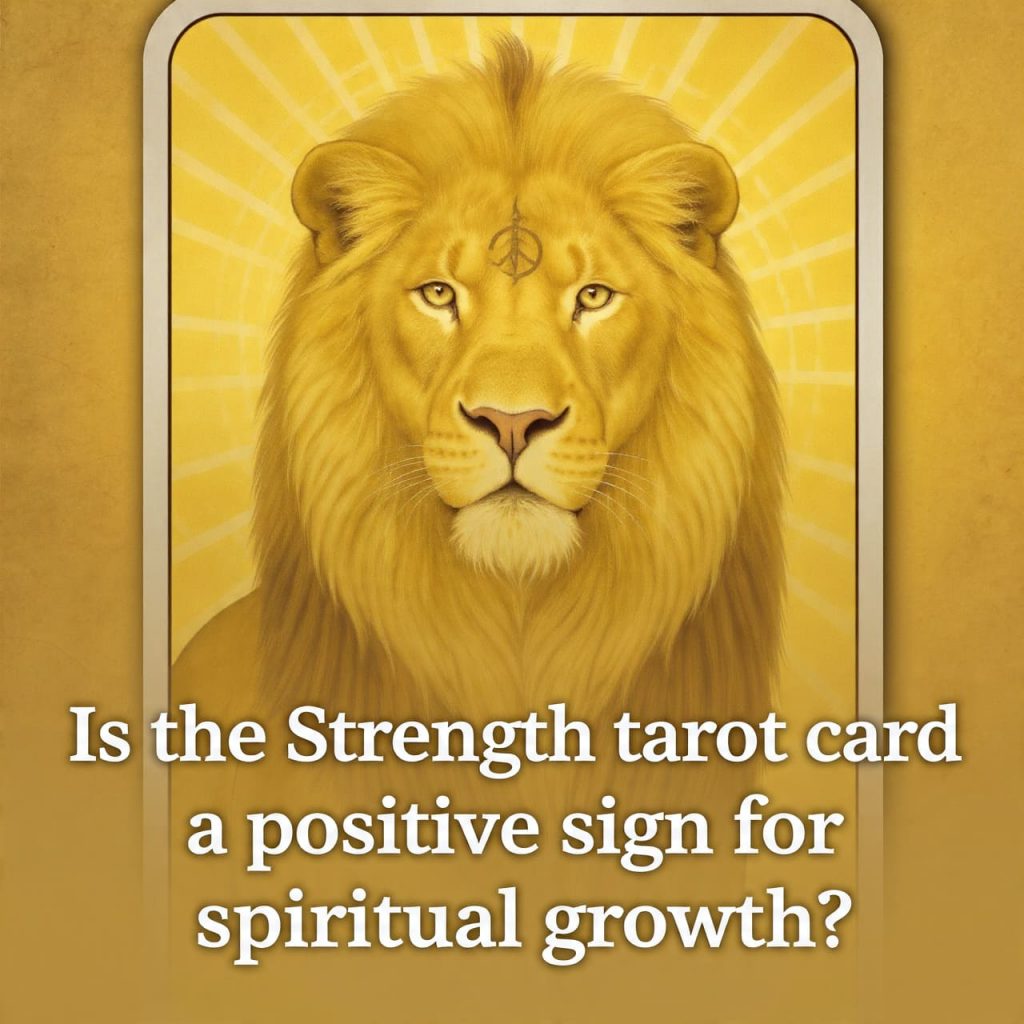
According to Astroideal experts, When the Strength tarot card appears in a spiritual growth reading, it often feels quietly reassuring rather than dramatic. Unlike cards that symbolize upheaval, awakening, or confrontation, Strength represents inner resilience, patience, and compassionate self-mastery. For people actively working on spiritual development, this can raise an important question: is Strength truly a sign of progress, or does it suggest endurance rather than transformation?

💜 Need a clear answer right now?
CONSULT THE YES OR NO TAROT Free · No registration · Instant resultPractitioners generally agree that Strength is one of the most constructive indicators of spiritual maturity. It reflects growth that happens internally—through emotional regulation, self-awareness, and conscious choice—rather than through external milestones. Interpretive strategies discussed in resources such as cards meanings emphasize that Strength operates on a subtle but enduring level. In spiritual contexts, it often appears when someone is learning to work with their inner nature rather than against it.
This article explores whether the Strength tarot card is a positive sign for spiritual growth, how practitioners interpret its message, and how its guidance supports long-term spiritual development grounded in balance and self-trust.
Understanding the Strength Tarot Card as a Spiritual Archetype
Core Symbolism and Inner Meaning
The Strength card traditionally depicts calm authority over instinct, emotion, or fear. Spiritually, practitioners interpret this as inner alignment rather than suppression. Strength does not conquer through force; it harmonizes opposing energies through awareness and compassion.
In spiritual growth readings, this symbolism reflects mastery of the inner world rather than control of external circumstances.
Strength Versus Willpower
A common misunderstanding is equating Strength with willpower alone. Many practitioners emphasize that Strength is not about resisting impulses but understanding them. Spiritually, this distinction is crucial—growth comes from integration, not denial.
This makes Strength especially relevant for sustainable spiritual development.
Upright and Reversed Spiritual Interpretations
Upright, Strength is commonly interpreted as spiritual steadiness. Practitioners suggest it reflects emotional regulation, patience, and confidence in one’s inner compass. Reversed interpretations vary. Some practitioners see reversed Strength as self-doubt or emotional overwhelm, while others interpret it as suppressed emotion needing gentle attention.
In both cases, the card points toward healing rather than judgment.
Strength and Emotional Maturity in Spiritual Growth
Emotional Awareness as Spiritual Practice
Many practitioners believe emotional awareness is a cornerstone of spiritual growth. Strength often appears when emotions are being acknowledged and managed consciously rather than reacted to impulsively.
This emotional maturity is often a sign of deep inner work.
Compassion Toward the Self
Spiritually, Strength emphasizes self-compassion. Rather than harsh discipline, it encourages kindness toward one’s own limitations and mistakes. Practitioners often interpret this as learning to grow without self-punishment.
Growth under Strength energy is patient and forgiving.
Guidance Rooted in Inner Stability
In readings guided by qualified professionals, Strength is frequently framed as a sign that spiritual grounding has been established. The individual is no longer seeking constant validation or dramatic signs of progress.
This stability often marks a turning point in spiritual practice.
Is Strength a Positive Sign for Spiritual Growth?
Inner Alignment Over External Change
Many practitioners consider Strength one of the most positive indicators of spiritual growth because it reflects inner alignment. External changes may be subtle, but internal balance has improved significantly.
This form of growth is often long-lasting.
When Progress Feels Quiet
Strength may feel underwhelming for those expecting spiritual breakthroughs or intense experiences. Practitioners note that its power lies in consistency rather than intensity.
Quiet progress is still progress.
Avoiding Misinterpretation as Stagnation
Because Strength does not bring dramatic shifts, it is sometimes misread as stagnation. Many individuals therefore seek insight from reliable readers who understand that spiritual growth can be steady and subtle rather than visibly transformative.
The Role of Strength in Different Spiritual Growth Phases
Early Spiritual Development
In early stages, Strength often appears as encouragement to develop patience. Practitioners interpret it as a reminder that growth takes time and that emotional regulation is as important as knowledge.
This phase lays a strong foundation.
Ongoing Inner Work and Integration
For those already engaged in spiritual practice, Strength frequently reflects integration. Lessons learned are being embodied rather than merely understood intellectually.
This embodiment marks true spiritual advancement.
Differentiating Emotional Healing From Romantic Symbolism
While emotional resilience may also be emphasized in love tarot readings, the Strength card’s role in spiritual growth is broader. It reflects mastery of inner patterns rather than relational dynamics alone.
Practical Spiritual Guidance When Strength Appears
Working With Inner Resistance
Strength invites gentle engagement with inner resistance. Practitioners often suggest observing fear, doubt, or impatience without judgment rather than attempting to eliminate them.
This approach supports sustainable growth.
Constructive Practices Many Practitioners Suggest
When Strength appears in spiritual growth readings, readers often recommend:
- Practicing emotional mindfulness
- Responding rather than reacting to challenges
- Cultivating patience with personal growth
- Developing self-compassion during setbacks
These practices align closely with Strength’s spiritual message.
Accessing Calm, Reflective Spiritual Support
Because Strength reflects inner work rather than urgency, many individuals prefer online tarot sessions that allow space for thoughtful reflection instead of fast conclusions.
Strength Compared to Other Spiritual Growth Cards
Strength Versus The Devil
The Devil highlights unconscious attachment, while Strength highlights conscious engagement. Practitioners often interpret Strength as the skill developed through facing Devil-like patterns with awareness rather than fear.
Together, they represent challenge and mastery.
Strength Versus Temperance
Temperance emphasizes balance through moderation, while Strength emphasizes balance through emotional courage. In spiritual growth, Strength often appears when emotional challenges require calm confidence rather than adjustment.
Both support inner harmony differently.
Spiritual Timing and Broader Cycles
Some practitioners contextualize Strength within broader spiritual cycles, occasionally referencing horoscope insights to explore periods where patience, resilience, and emotional steadiness are emphasized over outward change.
Professional Spiritual Tarot and Modern Practice
How Strength Is Interpreted in Spiritual Readings
Modern spiritual tarot often integrates emotional intelligence frameworks. Practitioners frame Strength as evidence of inner leadership—guiding oneself through difficulty without force.
This interpretation supports empowerment rather than dependency.
Reading Formats, Pricing, and Accessibility
Spiritual growth tarot readings involving reflective cards like Strength are offered in several formats.
| Format | Typical Duration | General Cost Range | Best For |
|---|---|---|---|
| Written insight | 20–30 minutes | Lower range | Quiet self-reflection |
| Live voice session | 30–45 minutes | Mid range | Emotional clarity |
| Interactive video | 45–60 minutes | Higher range | In-depth inner work |
Many individuals prefer video readings for nuanced discussion, while others choose phone readings when privacy supports honest emotional exploration.
Structured Interpretive Frameworks
Experienced readers often rely on layered interpretation systems similar to those discussed in cards meanings. These frameworks help ensure that Strength is understood as spiritual maturity rather than passive endurance.
Strength, Accuracy, and Long-Term Spiritual Development
Measuring Spiritual Progress Realistically
Strength encourages realistic expectations. Practitioners suggest that spiritual growth should be measured by emotional stability, clarity, and compassion rather than dramatic experiences.
This perspective reduces self-judgment.
Choosing Appropriate Guidance
Because Strength highlights inner authority, guidance should support autonomy. Clear interpretation frameworks help avoid over-dependence on external validation.
Different formats suit different needs at various stages.
Accessibility and Gentle Support
Spiritual development often unfolds during emotionally sensitive periods. Accessible and calm guidance helps ensure that insights are integrated thoughtfully rather than rushed.
Frequently Asked Questions
Is Strength always a good sign for spiritual growth?
Most practitioners suggest yes. It reflects maturity, patience, and inner alignment.
Does Strength mean I am spiritually advanced?
It often indicates progress, but growth continues. Strength reflects readiness rather than completion.
What if Strength appears reversed?
It may indicate self-doubt, emotional strain, or the need for gentler self-care.
Is Strength better than dramatic spiritual cards?
It serves a different purpose, emphasizing sustainability over intensity.
Does Strength require action?
It encourages conscious response rather than forceful action.
How long does Strength energy last?
There is no fixed timeframe. It remains relevant as long as inner mastery is developing.
Conclusion
The Strength tarot card is widely regarded as a positive and meaningful sign for spiritual growth. Rather than symbolizing dramatic awakening or external transformation, it reflects inner mastery, emotional resilience, and compassionate self-awareness. Many practitioners view Strength as evidence that spiritual lessons are no longer just understood—they are being lived.
When interpreted thoughtfully and in context, Strength reminds us that true spiritual growth is not about overcoming ourselves, but about learning to walk alongside our inner nature with patience, confidence, and trust.
| Strength Card Element | Spiritual Meaning | Growth Application | Challenge Aspect |
|---|---|---|---|
| The woman and lion | Gentle power taming wild nature | Mastering shadow self with compassion | Requires patience with inner lion |
| Infinity symbol | Eternal wisdom, endless potential | Access to unlimited spiritual resources | Managing vast inner potential |
| Red and blue flowers | Passion tempered with calm | Integrating fire and water within | Balancing intense emotions |
| Gentle command | Inner authority, true power | Leading yourself with wisdom | Distinguishing true from false power |
| The lion itself | Raw life force, courage, vitality | Channeling creative energy purposefully | Not suppressing but redirecting strength |
| Spiritual Path | Strength Card Role | Growth Message | Practice Recommended |
|---|---|---|---|
| Meditation/Mindfulness | Master of inner calm amidst storms | Peace comes through strength not escape | Daily meditation with focus |
| Shadow work | Integration of darker self aspects | Strength comes from knowing all of you | Journal shadow traits with compassion |
| Energy healing | Channel healing force responsibly | Your power serves others’ wholeness | Energy work with clear intention |
| Manifestation | Personal power actualization | Your will manifests when aligned with purpose | Visualize with feeling and belief |
| Overcoming fear | Courage to face inner wilderness | Bravery is strength in presence of fear | Small brave actions daily |
Limitations of this interpretation
No interpretation is universal or deterministic. The meaning varies depending on personal, cultural, and emotional context.
Use this guide as a starting point for your own reflection, not as an absolute truth.
Preguntas frecuentes
¿Is the Strength card always positive in spiritual readings?
Yes, Strength is consistently positive for spiritual growth. It represents inner power, courage, and mastery. Even when appearing in challenging positions, it indicates you have the spiritual strength to meet challenges. This card rarely, if ever, suggests spiritual stagnation.
¿What does Strength mean for my spiritual journey?
Strength suggests you’re developing genuine inner power through self-discipline and compassion. You’re learning to master your impulses and emotions while honoring your authentic desires. It’s a sign of spiritual maturation and integration of your shadow aspects.
¿How does Strength differ from The Magician spiritually?
The Magician represents manifesting external reality; Strength represents mastering internal reality. The Magician channels divine power outward; Strength channels it inward through self-discipline. Both are powerful, but Strength is the inner foundation that makes The Magician’s manifestation genuine.
¿Does Strength mean I’m spiritually advanced?
Not necessarily advanced, but progressing. Strength appears when you’re developing consciousness, patience with yourself, and integration of conflicting parts. You’re not spiritually ‘done’, but you’re actively strengthening your spiritual foundation.
¿What spiritual practices align with Strength energy?
Meditation, yoga, shadow work, breathwork, and conscious fasting all align with Strength. These practices teach mastery through gentleness and consistency. Strength rewards discipline applied with self-compassion, not harsh willpower.
¿Can Strength indicate I should end a spiritual practice?
Rarely. Strength suggests continuity and deepening commitment. If Strength appears when you’re considering quitting something, it usually means ‘persist, you’re building something real’. However, if paired with cards indicating stagnation, it might mean transform the practice, not abandon it.
¿What does reversed Strength mean spiritually?
Reversed Strength suggests loss of self-control, suppression of emotions, or domination by your shadow self. It indicates spiritual work is needed to reclaim your power. This is actually a valuable message—you’re being asked to do the integration work that Strength upright represents.
¿How does Strength relate to manifesting my spiritual goals?
Strength indicates that consistent, disciplined action aligned with your highest self manifests your spiritual goals. Not through force, but through patient, persistent alignment with your deepest values. Your spiritual goals manifest when you become the person capable of achieving them.
¿Does Strength mean my spiritual gifts are awakening?
Possibly. Strength often appears when intuitive abilities, healing powers, or creative talents are emerging. The card suggests these gifts are real and trustworthy if you approach them with discipline and clarity of intention.
¿What’s the most important message of Strength for spiritual growth?
That true power is internal mastery achieved through compassion, not external dominion through force. Spiritual growth means becoming who you’re capable of being—not spiritually perfect, but authentically strong, courageous, and integrated.
¿Can Strength guide me through spiritual crisis or dark night of the soul?
Absolutely. Strength appears as reminder that you have inner resources to endure dark spiritual nights. It suggests that difficult periods are opportunities to deepen spiritual strength, not signs of failure. Trust your capacity to emerge transformed from difficult passages.
Related articles
Want deeper clarity? Get a professional tarot reading at Astroideal.
