

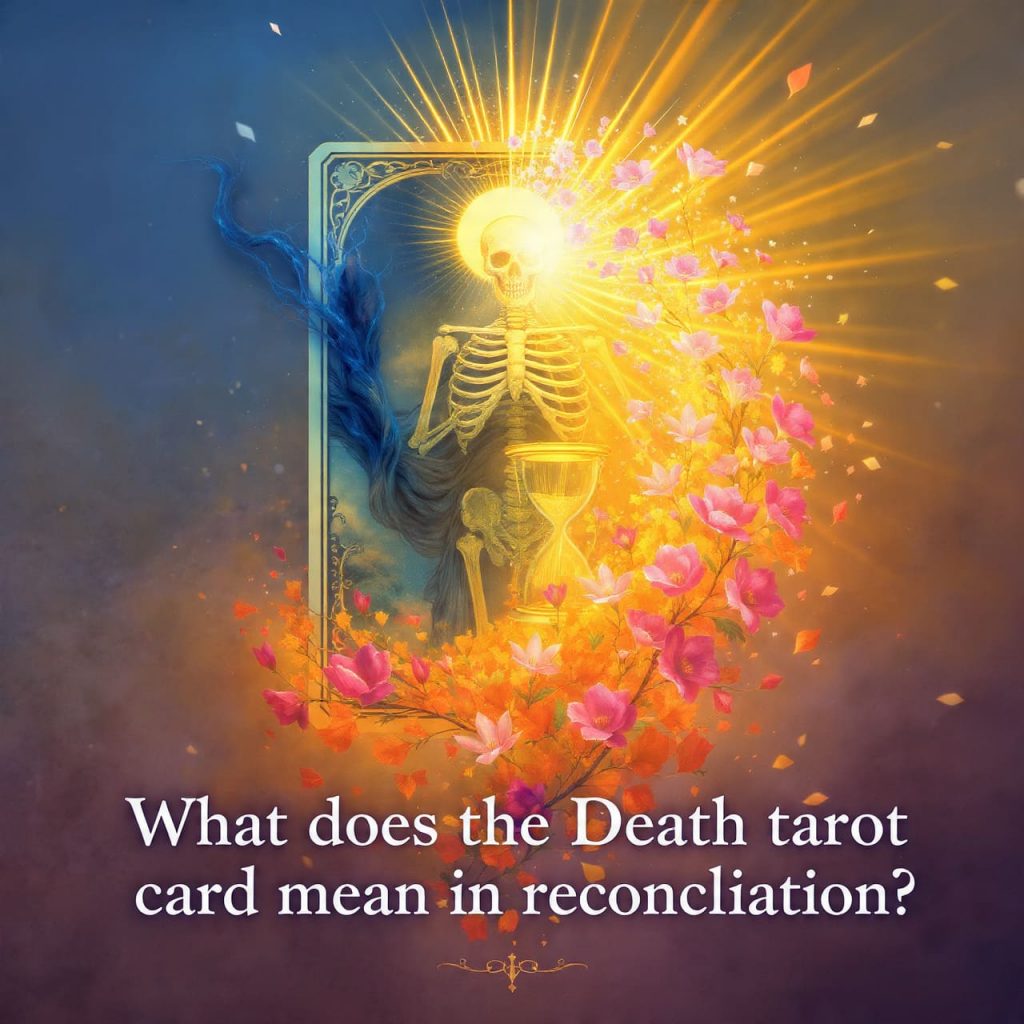
The Death tarot card often causes immediate concern when it appears in a reconciliation reading. Its name and imagery can feel final, especially for those hoping for renewal, reunion, or emotional closure. Many people assume it signals the absolute end of a connection. Practitioners, however, consistently emphasize that this assumption misses the card’s deeper spiritual meaning.

💜 Need a clear answer right now?
CONSULT THE YES OR NO TAROT Free · No registration · Instant resultIn tarot, Death rarely refers to physical endings. Instead, it symbolizes transformation, release, and irreversible change. In reconciliation contexts, this does not automatically mean that two people can never reconnect. Rather, it suggests that something fundamental must end before reconciliation—if it occurs at all—can take place in a healthy way. Interpretive approaches discussed in resources such as cards meanings stress that Death operates at the level of identity, patterns, and emotional cycles, not simple separation.
This article explores what the Death tarot card means in reconciliation, how practitioners interpret its presence, and why it is often considered one of the most honest and necessary cards in relationship healing.
Understanding the Death Tarot Card in Relationship Readings
Core Symbolism and Emotional Themes
The Death card traditionally represents endings that make room for transformation. In relationship readings, practitioners often interpret it as the closing of an emotional chapter rather than the erasure of connection itself. This closure may involve letting go of old roles, resentments, or expectations.
In reconciliation readings, Death highlights what cannot continue in its current form.
Upright Meaning in Reconciliation Contexts
When upright, Death is commonly interpreted as a definitive ending of a particular dynamic. Practitioners suggest it may indicate that reconciliation is only possible if both individuals are willing to release the past version of the relationship entirely.
This is not a card of “trying again,” but of starting differently.
Reversed Interpretations and Resistance to Change
Reversed interpretations vary. Some practitioners believe reversed Death points to resistance—holding on to what should be released. Others see it as a delayed transformation, where endings are inevitable but postponed.
In reconciliation readings, reversed Death often signals emotional limbo rather than resolution.
Is the Death Card a Positive Sign for Reconciliation?
Transformation Versus Reunion
Many practitioners caution that Death is not a promise of reconciliation. However, it can be positive in a deeper sense. It clears emotional ground, removing patterns that made reconciliation unhealthy or impossible in the past.
If reconciliation happens, it will not resemble the previous relationship.
When Endings Create Emotional Freedom
For some, Death indicates that reconciliation is not the healthiest outcome. Practitioners often interpret the card as freeing both individuals from cycles of pain, allowing emotional growth even without reunion.
This form of closure can be profoundly healing.
The Importance of Responsible Interpretation
Because the Death card carries emotional weight, ethical interpretation is essential. Many people therefore seek guidance from qualified professionals who explain transformation without encouraging fear, attachment, or false hope.
The Death Card in Different Reconciliation Scenarios
Reconciliation After Repeated Breakups
When Death appears after multiple separations, practitioners often interpret it as a signal that the cycle must end. Reconciliation without transformation would likely repeat the same outcome.
The card asks whether growth is truly occurring.
Situations Involving Emotional Exhaustion
In emotionally draining relationships, Death may reflect the soul’s need for rest. Practitioners suggest it can indicate that reconciliation requires deep emotional reset, not negotiation.
Sometimes, healing requires finality.
Differentiating Romantic Hope From Emotional Healing
While reconciliation questions often arise from emotional longing, the Death card redirects focus toward healing rather than desire. This differs from emotionally predictive approaches common in love tarot readings, where future outcomes are emphasized more than inner change.
Spiritual and Psychological Meaning of Death in Reconciliation
Identity Shifts After Separation
The Death card often reflects identity change. Practitioners suggest that reconciliation may require becoming different people than those who were originally in the relationship.
Without this shift, reunion lacks foundation.
Grief as a Necessary Stage
Spiritually, Death validates grief. Practitioners often emphasize that grieving the old relationship is not failure—it is preparation. Emotional honesty allows transformation to occur naturally.
Avoiding grief delays reconciliation clarity.
Letting Go of Outcome Attachment
A core spiritual lesson of Death is surrender. Practitioners interpret the card as releasing attachment to specific outcomes, whether reunion or closure.
This surrender often brings unexpected clarity.
Practical Guidance When Death Appears in Reconciliation Readings
Accepting What Has Ended
The first step is acceptance. Practitioners often advise acknowledging what is truly over—whether a dynamic, expectation, or role—before seeking answers about the future.
Denial blocks transformation.
Constructive Steps Many Practitioners Suggest
When the Death card appears in reconciliation readings, readers often recommend:
- Allowing space for grief and emotional processing
- Releasing blame and unresolved resentment
- Reflecting on personal transformation since separation
- Avoiding premature contact until clarity emerges
These steps support genuine closure or renewal.
Accessing Reflective, Safe Guidance
Because Death-related readings can be emotionally intense, many individuals choose online tarot sessions that allow for privacy, pacing, and thoughtful dialogue rather than rushed reassurance.
Death Compared to Other Reconciliation-Related Tarot Cards
Death Versus The Tower
While both cards involve endings, practitioners distinguish them clearly. The Tower represents sudden disruption, whereas Death represents natural, necessary closure.
In reconciliation, Death feels inevitable rather than shocking.
Death Versus Judgement
Judgement symbolizes review and rebirth, while Death symbolizes release. Practitioners often interpret Death as the step that must occur before Judgement can offer renewal.
This sequence clarifies emotional timing.
Cycles, Timing, and Broader Context
Some practitioners place the Death card within larger emotional cycles, occasionally referencing horoscope insights to understand periods when endings, release, and transformation are emphasized over reunion or rebuilding.
Professional Reconciliation Tarot and Ethical Practice
How Reconciliation Readings Handle Endings
Modern reconciliation tarot focuses on emotional responsibility rather than outcome fixation. Practitioners frame Death as an invitation to evolve rather than a verdict.
This approach reduces dependency and emotional harm.
Reading Formats, Pricing, and Accessibility
Reconciliation tarot readings involving transformative cards like Death are available in several formats.
| Format | Typical Duration | General Cost Range | Best For |
|---|---|---|---|
| Written analysis | 20–30 minutes | Lower range | Private processing |
| Live voice session | 30–45 minutes | Mid range | Emotional clarity |
| Interactive video | 45–60 minutes | Higher range | Deep transformation work |
Some individuals prefer video readings for nuanced emotional discussion, while others choose phone readings when privacy supports vulnerability.
Choosing Credible Support
Because Death readings can influence major emotional decisions, many people seek insight from reliable readers who prioritize clarity, boundaries, and empowerment over reassurance.
Frequently Asked Questions
Does the Death card mean no reconciliation?
Not always. It means the old relationship must end before anything new can begin.
Is Death worse than other breakup cards?
Practitioners often say it is more honest, not worse. It emphasizes truth over comfort.
Can Death indicate eventual reunion?
Possibly, but only after deep transformation on both sides.
What if Death appears reversed?
It may indicate resistance to letting go or fear of change.
Should I reach out if Death appears?
Most practitioners suggest waiting until emotional clarity is achieved.
How long does Death energy last?
There is no fixed timeframe. It lasts until release and transformation occur.
Conclusion
The Death tarot card carries one of the most misunderstood messages in reconciliation readings. Rather than signaling hopelessness, it represents the necessity of ending what no longer serves growth. Whether reconciliation ultimately happens or not, Death insists on honesty, release, and transformation.
When interpreted thoughtfully and without fear, the Death card becomes a powerful guide. It reminds us that true reconciliation—whether with another person or with ourselves—can only occur after the past has been fully acknowledged, grieved, and released.
