

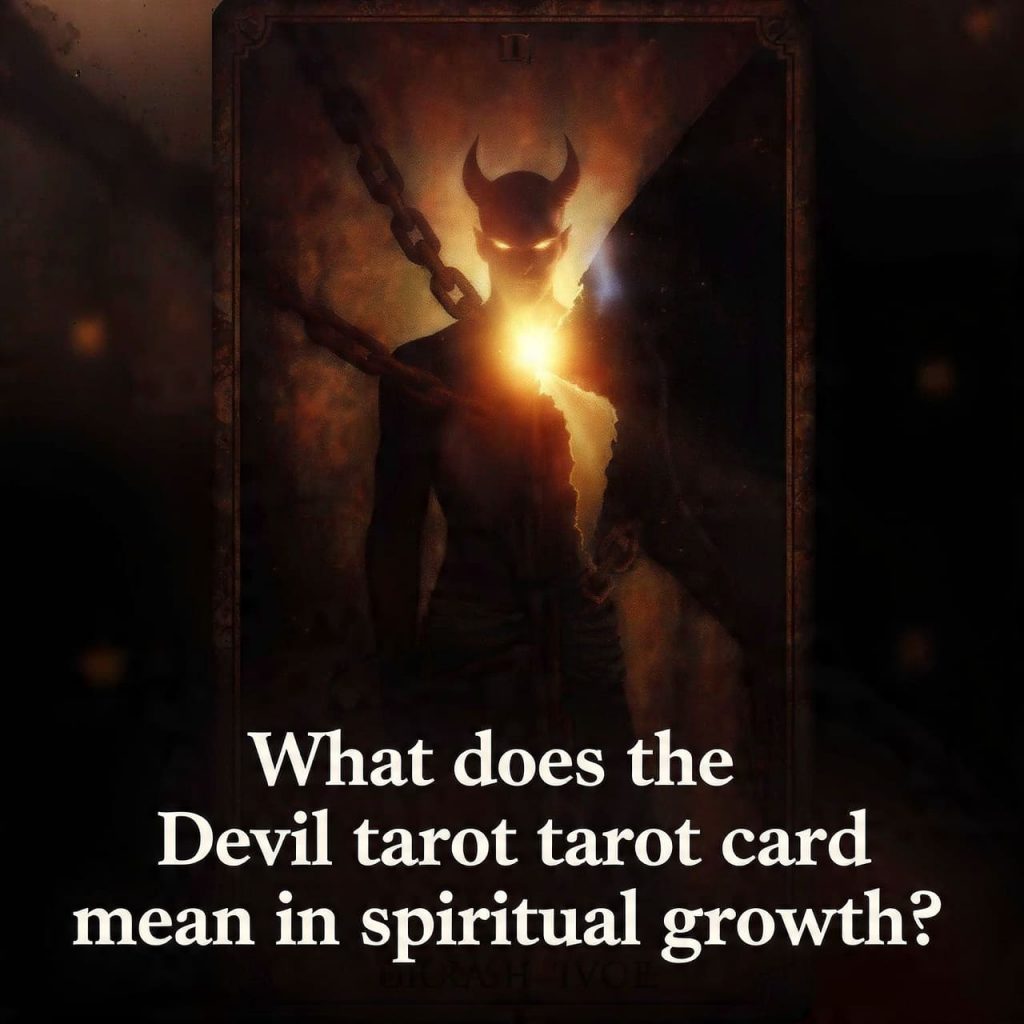
Few tarot cards provoke as much discomfort in spiritual readings as the Devil. Its imagery and symbolism often trigger fear-based assumptions, especially for those focused on inner healing or spiritual progress. Many people interpret the Devil as a setback or warning sign, believing it represents failure, temptation, or regression on the spiritual path. Practitioners, however, consistently emphasize that this interpretation is incomplete.

💜 Need a clear answer right now?
CONSULT THE YES OR NO TAROT Free · No registration · Instant resultSpiritually, the Devil tarot card is less about evil or punishment and more about awareness. It highlights unconscious attachments, limiting beliefs, and patterns that quietly restrict growth. Interpretive frameworks discussed in resources such as cards meanings encourage reading the Devil as an invitation to consciousness rather than a judgment. In the context of spiritual growth, the Devil often appears when deeper freedom becomes possible—precisely because hidden constraints are ready to be seen.
This article explores what the Devil tarot card means in spiritual growth, how practitioners interpret its appearance, and why it is often considered one of the most transformative, though challenging, spiritual archetypes in the tarot.
Understanding the Devil as a Spiritual Archetype
Core Symbolism and Inner Meaning
The Devil traditionally symbolizes attachment, illusion, and voluntary limitation. Spiritually, practitioners often interpret the card as a mirror rather than a threat. The chains shown in the imagery are frequently loose, suggesting that restriction persists not because escape is impossible, but because awareness has not yet occurred.
In spiritual growth readings, the Devil reflects where personal power has been unconsciously surrendered.
Why the Devil Appears on the Spiritual Path
Many practitioners believe the Devil emerges when surface-level spirituality is no longer sufficient. It often appears when affirmations, rituals, or ideals have been used to avoid deeper self-examination. At this stage, growth requires honesty rather than positivity.
This is why the Devil is often associated with spiritual maturity rather than spiritual failure.
Upright and Reversed Spiritual Interpretations
Upright, the Devil is commonly interpreted as recognition of attachment. Reversed interpretations vary. Some practitioners see reversal as the beginning of release, while others interpret it as denial or avoidance of an issue.
In spiritual contexts, both positions are viewed as stages within the same awakening process.
The Devil and Awareness of Spiritual Attachment
Identifying Limiting Beliefs
One of the Devil’s key spiritual messages involves belief systems. Practitioners often interpret the card as highlighting beliefs that once provided comfort but now limit growth. These may include rigid spiritual identities, fear-based doctrines, or the need for external validation.
Awareness of these beliefs is the first step toward liberation.
Ego, Identity, and Spiritual Labels
Spiritually, the Devil frequently points to over-identification with roles or labels, including spiritual ones. Practitioners suggest that attachment to being “enlightened,” “healed,” or “advanced” can quietly block authentic growth.
True spiritual freedom often requires releasing the need to appear evolved.
Ethical Interpretation and Responsibility
Because the Devil touches sensitive psychological territory, interpretation requires care. Many people therefore consult qualified professionals who emphasize empowerment, accountability, and compassion rather than fear or shame.
Shadow Work and the Devil’s Role in Growth
Understanding the Shadow in Spiritual Practice
The shadow refers to aspects of the self that are repressed, denied, or judged. The Devil tarot card is strongly associated with shadow work, as it brings these hidden elements into awareness. Spiritually, integration—not elimination—is the goal.
Growth occurs when rejected parts are acknowledged without judgment.
The Devil as a Catalyst for Inner Honesty
Many practitioners believe the Devil appears when spiritual bypassing has reached its limit. This includes avoiding discomfort by focusing only on light, love, or positivity. The Devil asks for truth instead of comfort.
This confrontation, though uncomfortable, often leads to deeper authenticity.
Differentiating Desire From Dependency
Desire itself is not condemned by the Devil. Practitioners often emphasize that the card highlights unconscious dependency rather than natural desire. Spiritually, growth involves recognizing when desire becomes compulsive or fear-driven.
This distinction is essential for balanced spiritual development.
Is the Devil a Positive Sign for Spiritual Growth?
When Awareness Becomes Liberation
Many practitioners consider the Devil a positive sign when interpreted correctly. Its appearance often signals readiness to confront patterns that have quietly limited freedom. Awareness alone begins the process of release.
From this perspective, the Devil represents opportunity rather than obstruction.
When the Message Feels Challenging
The Devil rarely feels comforting. Practitioners note that its message can feel confronting, especially when spiritual identity is tied to avoidance of discomfort. This challenge, however, is often precisely what enables growth.
Resistance usually signals that something important is being revealed.
Avoiding Moral or Fear-Based Interpretations
Spiritually, the Devil is not about moral failure. Misinterpreting it as punishment can reinforce shame and stagnation. Many individuals therefore seek guidance from reliable readers who emphasize awareness over judgment.
The Devil in Different Spiritual Growth Scenarios
Spiritual Stagnation and Repetitive Cycles
The Devil often appears when someone feels spiritually stuck despite effort. Practitioners interpret this as a sign that repetition is occurring at a subconscious level. Growth requires examining what is being avoided rather than what is being practiced.
Breaking cycles begins with recognition.
Control, Fear, and Spiritual Discipline
In some cases, the Devil highlights excessive control or rigid discipline. Practitioners suggest that spiritual practices rooted in fear rather than curiosity can become limiting rather than liberating.
The Devil invites reevaluation of motivation.
Emotional Healing Versus Spiritual Avoidance
While emotional reassurance may dominate love tarot readings, the Devil’s role in spiritual growth focuses on responsibility, awareness, and integration rather than comfort or affirmation.
Practical Spiritual Guidance When the Devil Appears
Reflection Before Release
A consistent recommendation is reflection before attempting change. The Devil reveals patterns that must be understood before they can be released. Forcing liberation without insight often leads to repetition.
Understanding creates sustainable freedom.
Constructive Practices Many Practitioners Suggest
When the Devil appears in spiritual growth readings, readers often recommend:
- Identifying compulsive or fear-based behaviors
- Examining beliefs that feel restrictive or obligatory
- Practicing self-honesty without self-punishment
- Seeking support when patterns feel overwhelming
These practices emphasize compassion alongside responsibility.
Accessing Safe, Reflective Guidance
Because the Devil can surface sensitive material, many individuals prefer online tarot sessions that allow privacy, pacing, and thoughtful dialogue rather than rushed interpretation.
The Devil Compared to Other Spiritual Growth Cards
Devil Versus Death
While Death represents release and transformation, the Devil represents what resists release. Practitioners often interpret the Devil as the awareness phase that precedes genuine transformation.
Without awareness, change remains superficial.
Devil Versus The Tower
The Tower reflects sudden disruption, while the Devil reflects ongoing limitation. Spiritually, the Devil often appears as a warning that conscious change can prevent crisis-driven transformation.
This distinction highlights the Devil’s preventative role.
Cycles, Timing, and Broader Context
Some practitioners contextualize the Devil within broader spiritual cycles, occasionally referencing horoscope insights to explore periods when shadow integration and self-examination are emphasized rather than outward progress.
Professional Spiritual Tarot and Ethical Practice
How the Devil Is Approached in Modern Readings
Modern spiritual tarot often integrates psychology and mindfulness. Practitioners frame the Devil as a card of empowerment, emphasizing choice and awareness rather than external threat.
This approach supports healing rather than fear.
Reading Formats and Emotional Safety
Because Devil readings can be emotionally intense, communication style matters. Many practitioners prefer video readings for spiritual topics, as visual presence and tone help create safety and clarity.
Others choose phone readings when anonymity and focus support openness.
Structured Interpretive Frameworks
Experienced readers often rely on layered interpretive strategies similar to those discussed in cards meanings. These frameworks ensure that the Devil is interpreted as a stage of awakening rather than a verdict on spiritual worth.
Conclusion
The Devil tarot card holds one of the most misunderstood roles in spiritual growth. Rather than symbolizing evil or regression, it reveals the subtle ways in which fear, attachment, and unconscious belief restrict freedom. Many practitioners view its appearance as a sign that deeper honesty and liberation are now possible.
When interpreted thoughtfully and without fear, the Devil becomes a powerful ally in spiritual development—one that transforms limitation into awareness and awareness into genuine growth.
The Devil Card: Meanings in Different Contexts
| Context | Devil Card Meaning | Spiritual Message |
|---|---|---|
| Addiction or dependency | Chains that feel real but can be released | Awareness is the first step to freedom |
| Relationships | Unhealthy attachment or toxic dynamic | Examine what keeps you bound |
| Career | Golden handcuffs, work-as-escape | Is success aligned with your values? |
| Self-sabotage | Inner demons and limiting beliefs | The chains are of your own making |
| Shadow work | Integration of rejected parts of self | What you resist, persists |
Shadow Work Practices Inspired by the Devil Card
| Practice | How It Works | Time Required |
|---|---|---|
| Naming your chains | List what you feel bound by and examine each | 30 min journaling |
| Desire inventory | What do you want but judge yourself for wanting? | 20 min writing |
| Shadow dialogue | Write a conversation with your “shadow” self | 45 min journaling |
| Reversal meditation | Visualize the reversed Devil: freedom and release | 15 min meditation |
Limitations of This Interpretation
Tarot is a reflective tool, not a predictive science. Results vary by reader, question, and context. Use these insights as guidance for your own reflection, not as a substitute for professional advice.
For significant decisions, combine tarot with qualified guidance in the relevant professional domain.
Preguntas frecuentes
Is the Devil tarot card a bad sign?
Not necessarily. The Devil is one of the most psychologically rich cards in the deck. It points to attachments, shadows, and bindings — but the key insight is that the chains can be removed.
What does the Devil card mean for spiritual growth?
In spiritual development, the Devil represents the call to shadow work: confronting the parts of yourself you’ve denied, suppressed, or judged, because these hold enormous creative and spiritual energy.
What is shadow work in relation to the Devil card?
Shadow work, as conceived by Carl Jung, involves integrating the denied parts of the self. The Devil card often signals that shadow material is active and ready to be worked with consciously.
Does the Devil card always indicate addiction or unhealthy attachment?
It frequently does, but the attachment can be to anything: a relationship, a story about yourself, a job, a substance, or a fear. The common thread is that the attachment limits freedom.
What does a reversed Devil card mean?
The reversed Devil typically indicates release from a binding, recovery from addiction, or breaking a destructive pattern. It’s often a very positive sign for someone in a healing process.
Can the Devil card represent sexuality or desire?
Yes. In Jungian and esoteric traditions, the Devil also represents raw instinctual energy, desire, and the body’s intelligence. This is neither good nor bad — it’s energy that needs wise channeling.
What spiritual lesson does the Devil card offer?
That awareness transforms. You cannot free yourself from what you refuse to see. The Devil’s lesson is to look at the binding clearly — and then choose consciously whether to remove it.
How should I respond when the Devil appears in a reading?
With curiosity rather than fear. Ask: where am I giving away my power? What belief or behavior is limiting my freedom? What would I do if I weren’t afraid of this?
Is the Devil card related to actual evil or dark forces?
In modern tarot, the Devil represents psychological and energetic dynamics, not supernatural evil. The imagery draws on Judeo-Christian symbolism, but the interpretation is psychological.
What other cards often appear alongside the Devil in a spiritual growth reading?
The Tower (sudden break from binding), The Hermit (inner work), The Star (hope after shadow), and Judgement (transformation and call to higher self) frequently accompany the Devil in growth readings.
Can a tarot reading help me understand my personal shadow?
Yes. A shadow work spread with a skilled reader can identify the specific patterns, fears, or stories that are most active in your current experience.
Artículos relacionados
Get clarity today. Connect with an expert reader at Astroideal — available 24/7.
