

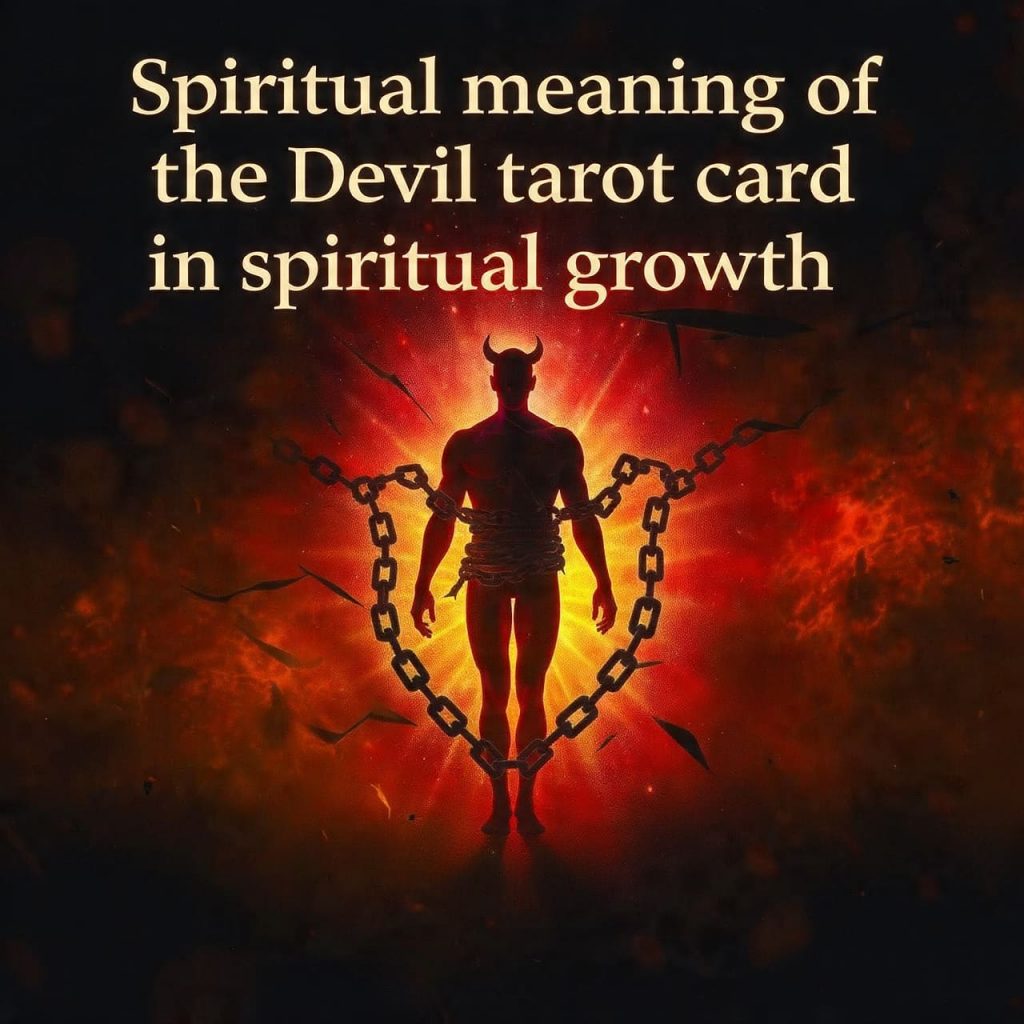
According to Astroideal experts, Among all tarot archetypes, the Devil card often provokes the strongest emotional reaction. Many people associate it with negativity, temptation, or moral failure, especially when it appears in readings related to spirituality. Yet practitioners consistently emphasize that the Devil is not a symbol of evil in a literal sense. Instead, it represents awareness—specifically, awareness of attachment, limitation, and unconscious patterns that restrict spiritual growth.

💜 Need a clear answer right now?
CONSULT THE YES OR NO TAROT Free · No registration · Instant resultFrom a spiritual perspective, the Devil card is less about external forces and more about internal dynamics. Many believe it highlights the point where growth becomes possible precisely because illusion is exposed. Interpretive frameworks discussed in resources such as cards meanings encourage readers to examine this card through symbolism, context, and personal reflection rather than fear-based assumptions. When approached thoughtfully, the Devil can be one of the most powerful catalysts for spiritual maturity.
This article explores the spiritual meaning of the Devil tarot card in spiritual growth, examining how practitioners interpret its message, when it signals opportunity rather than obstacle, and how individuals can work constructively with its themes.
Understanding the Devil Tarot Card as a Spiritual Archetype
Core Symbolism and Inner Meaning
The Devil card traditionally depicts figures bound by chains that are loose enough to be removed. Spiritually, this imagery is often interpreted as voluntary bondage—habits, beliefs, or identities that persist because they feel familiar rather than because they are necessary. Practitioners commonly view the Devil as a mirror reflecting where personal power has been unconsciously surrendered.
Rather than representing an external threat, the card symbolizes inner constraints that can be transcended through awareness.
Why the Devil Appears in Spiritual Readings
In spiritual growth readings, the Devil frequently appears when an individual is ready to confront aspects of themselves that have been ignored or rationalized. Many believe the card surfaces when spiritual bypassing—avoiding discomfort by focusing only on positivity—has reached its limit.
Its presence suggests that genuine growth now requires honesty rather than idealism.
Upright and Reversed Spiritual Interpretations
Upright, the Devil is often interpreted as recognition of attachment or illusion. Reversed interpretations vary; some practitioners believe reversal signals the beginning of release, while others see it as denial of a problem. In spiritual contexts, reversed Devil may indicate resistance to confronting uncomfortable truths.
Both positions, however, are viewed as stages within a larger growth process.
The Devil Card and Awareness of Attachment
Identifying Spiritual Attachments
Attachments are not always material. Spiritually, practitioners define attachment as identification with roles, beliefs, or outcomes that limit freedom. The Devil card often highlights attachment to identity, validation, control, or even spiritual labels.
Recognizing these attachments is considered the first step toward liberation.
Ego, Desire, and Consciousness
Many spiritual traditions emphasize that desire itself is not the problem; unconscious desire is. The Devil card is commonly interpreted as a prompt to examine motivations. Are actions driven by fear, approval-seeking, or avoidance?
This examination aligns with spiritual disciplines focused on self-inquiry and mindfulness.
The Role of Choice in Spiritual Bondage
A key aspect of the Devil card is choice. Practitioners frequently note that the chains in the card are rarely locked. Spiritually, this suggests that limitation persists not because escape is impossible, but because release requires responsibility.
This interpretation is often emphasized by qualified professionals who frame the Devil as an empowerment card rather than a warning.
Spiritual Growth Through Shadow Integration
Understanding the Shadow Concept
The shadow refers to aspects of the self that are repressed or denied. The Devil card is commonly associated with shadow work, as it brings attention to traits or desires that conflict with one’s self-image.
Spiritually, integrating the shadow is viewed as essential for wholeness rather than something to be avoided.
The Devil as a Catalyst for Inner Honesty
Many practitioners believe the Devil appears when spiritual growth has become performative rather than authentic. The card challenges individuals to confront contradictions between values and behavior.
This confrontation, though uncomfortable, is often seen as transformative.
Differentiating Shame From Awareness
A crucial distinction in Devil interpretations is between shame and awareness. The card does not inherently condemn; it reveals. Spiritually mature readings emphasize compassion and responsibility rather than judgment.
In contrast to emotionally focused interpretations common in love tarot readings, the Devil in spiritual growth readings centers on consciousness and accountability.
When the Devil Card Signals a Turning Point in Growth
Recognizing Repetitive Spiritual Patterns
The Devil often appears when someone feels spiritually “stuck.” Practitioners interpret this as a signal that repetitive patterns—such as cycles of guilt, over-discipline, or avoidance—are ready to be examined.
This stagnation is not failure but preparation for deeper insight.
Breaking Illusions of Control or Purity
Spiritually, the Devil challenges ideals of perfection. Many believe it appears when rigid spiritual rules or identities have become restrictive rather than supportive.
Releasing the need to appear enlightened can paradoxically deepen authentic growth.
Ethical Interpretation and Discernment
Because the Devil card touches sensitive psychological territory, ethical interpretation is essential. Many recommend consulting reliable readers who emphasize grounding and discernment rather than fear-based messaging.
Practical Spiritual Guidance When the Devil Appears
Reflection Before Action
One consistent recommendation is reflection rather than immediate change. The Devil card often reveals underlying dynamics that require understanding before release is possible.
Journaling, meditation, or therapy-informed spiritual practices are commonly suggested.
Constructive Practices Many Practitioners Recommend
When working with the Devil card in spiritual growth contexts, readers often suggest:
- Identifying habits or beliefs that feel compulsory
- Observing emotional triggers without judgment
- Practicing self-honesty rather than self-criticism
- Seeking support when patterns feel overwhelming
These practices focus on awareness rather than suppression.
Accessible Formats for Deep Reflection
Because the Devil card involves introspection, many individuals prefer private and flexible formats such as online tarot sessions, which allow space for thoughtful dialogue without pressure.
Comparing the Devil to Other Spiritual Growth Tarot Cards
Devil Versus The Tower
While both cards address disruption, practitioners distinguish them clearly. The Tower represents sudden external upheaval, whereas the Devil reflects internal limitation.
Spiritually, the Devil often precedes the Tower, offering a chance to change consciously before crisis forces transformation.
Devil Versus Death
Death symbolizes release and renewal, while the Devil represents what resists release. Together, they can illustrate the tension between holding on and letting go.
This pairing is often viewed as a pivotal spiritual lesson.
Cycles, Timing, and Broader Context
Some practitioners contextualize the Devil card within larger spiritual cycles, occasionally referencing horoscope insights to explore timing and developmental phases rather than fixed meanings.
Professional Perspectives on the Devil in Spiritual Tarot
Modern Spiritual Tarot Approaches
Contemporary spiritual tarot often integrates psychology, mindfulness, and ethics. In this context, the Devil card is framed as an invitation to reclaim agency rather than as a moral judgment.
This approach aligns with growth-oriented rather than predictive models.
Reading Formats and Emotional Safety
Given the depth of the Devil’s themes, communication style matters. Many practitioners prefer video readings for spiritual topics, as visual presence can foster trust and clarity.
Others choose phone readings when privacy and anonymity support openness.
Structured Interpretation and Balance
Experienced readers often rely on layered interpretive strategies similar to those discussed in cards meanings. These frameworks ensure that complex archetypes like the Devil are interpreted with nuance, balance, and psychological sensitivity.
Frequently Asked Questions
Is the Devil card bad for spiritual growth?
Most practitioners suggest it is not bad, but challenging. It often represents an opportunity for deep awareness and liberation.
Does the Devil mean spiritual failure?
No. It usually reflects unconscious patterns rather than failure. Awareness itself is a sign of growth.
Can the Devil indicate addiction or obsession?
In some contexts, yes. It may highlight compulsive behaviors that need compassionate examination.
Is the Devil always about temptation?
Not always. It can also represent fear, control, or identity attachment.
Should spiritual practices change when this card appears?
Practitioners often recommend reflection before change. Understanding the pattern comes first.
How long does the Devil’s influence last?
There is no fixed timeframe. It often lasts until awareness leads to conscious choice.
Conclusion
Spiritually, the Devil tarot card is one of the most misunderstood yet transformative archetypes in the deck. Rather than representing evil or punishment, it highlights the subtle ways in which attachment, fear, and unconscious patterns limit growth. Many practitioners view its appearance as a sign that deeper awareness is now possible.
When approached with honesty and compassion, the Devil card can become a turning point—one that shifts spiritual growth from idealized concepts into lived, embodied freedom.
The Devil Card in Major Arcana Context
| Aspect | Meaning | Spiritual Implication |
|---|---|---|
| Number | XV (15) | Represents duality and shadow work |
| Element | Earth | Material realm and earthly attachments |
| Chakra | Root Chakra | Foundation and grounding energy |
| Astrological Sign | Capricorn | Responsibility and karmic lessons |
| Numerology | 1+5=6 | Harmony through understanding duality |
Shadow Work and Spiritual Growth Phases
| Phase | Characteristics | Growth Opportunity |
|---|---|---|
| Recognition | Acknowledging shadow aspects | Self-awareness and honesty |
| Integration | Accepting darker impulses | Wholeness and authenticity |
| Transcendence | Rising above material bonds | Spiritual liberation |
| Mastery | Using power consciously | Personal transformation |
Limitaciones de esta interpretación
Ninguna lectura de tarot es universal ni determinista. El significado de las cartas varía según el contexto personal, la pregunta formulada y la intuición del lector.
Usa esta guía como punto de partida para tu propia reflexión, no como verdad absoluta. Si necesitas orientación profesional, consulta con un experto cualificado.
Preguntas frecuentes
¿What does the Devil card represent in spiritual growth?
The Devil card symbolizes shadow work, personal limitations, and the power within darkness. It encourages recognizing and integrating suppressed aspects for genuine spiritual evolution.
¿Is the Devil tarot card always negative?
No. While it often indicates bondage or temptation, it also represents personal power, sexuality, and material success when understood correctly.
¿How does the Devil card relate to chakras?
The Devil is associated with the Root Chakra, representing grounding, survival instincts, and our connection to the physical body and material world.
¿What is shadow work in tarot practice?
Shadow work involves confronting unconscious patterns, fears, and rejected parts of yourself. The Devil card is a powerful tool for this inner exploration.
¿Can the Devil card indicate freedom?
Yes. It can signify breaking free from self-imposed chains, recognizing your power, and choosing authentic expression over societal expectations.
¿What does reversed Devil mean spiritually?
Reversed, it often indicates liberation from bondage, breaking unhealthy patterns, or gaining spiritual insight and freedom from limitations.
¿How does the Devil card connect to personal responsibility?
It emphasizes that we create our own reality through choices and attachments. It’s a call to take responsibility for our spiritual path.
¿Is the Devil card about temptation?
It can represent temptation, but more deeply it’s about understanding desire, power, and the forces that control us until we become aware.
¿What spiritual lessons does the Devil teach?
It teaches acceptance of human nature, the importance of balance, integration of shadow self, and conscious use of personal power.
¿How should I interpret the Devil in spiritual readings?
Look at surrounding cards and life context. It’s usually about recognizing what binds you and choosing to transcend those limitations.
¿Does the Devil card relate to the ego?
Yes, it represents ego desires, material attachments, and self-interest. Understanding this is key to spiritual growth and enlightenment.
Artículos relacionados
¿Quieres una lectura personalizada? Consulta con nuestros tarotistas en Astroideal.
