

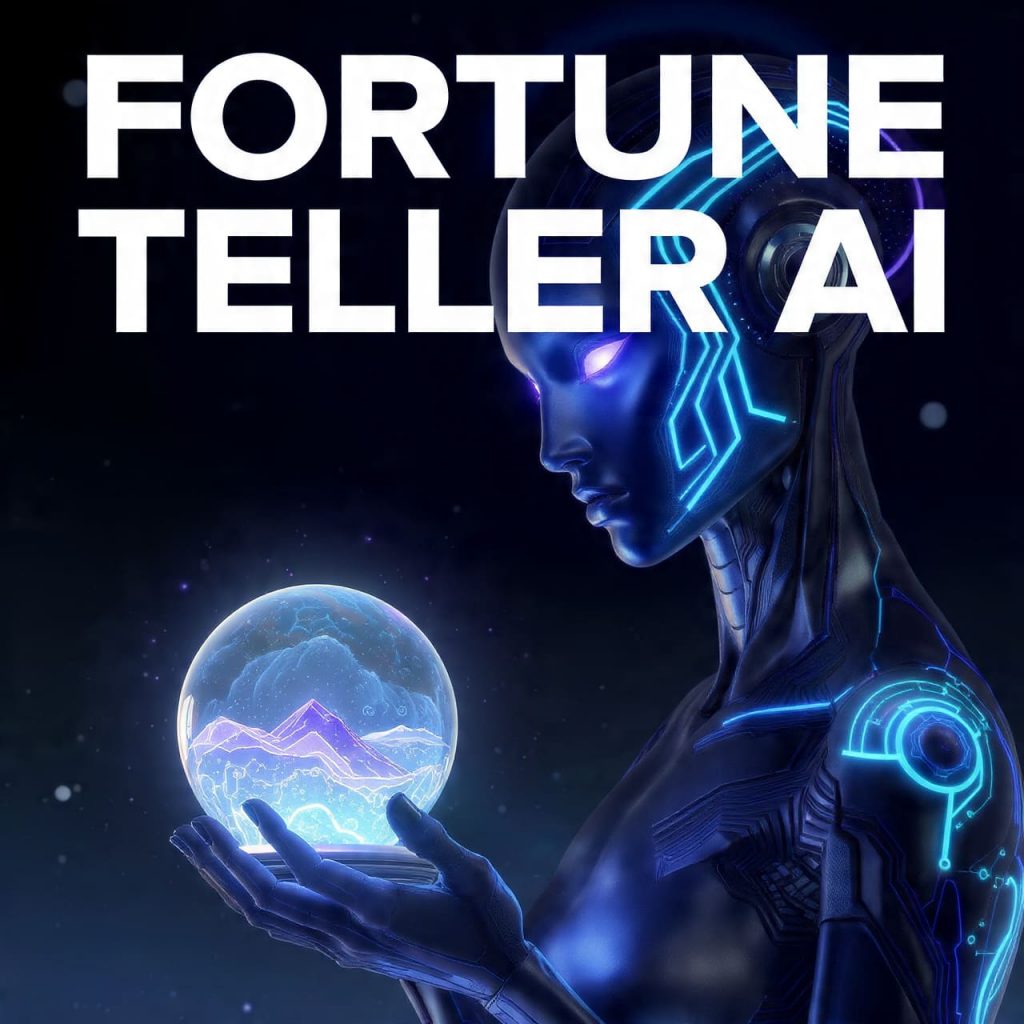
The concept of a fortune teller AI represents a growing intersection between technology, symbolism, and human curiosity. As artificial intelligence becomes more integrated into everyday life, many people are exploring AI-driven fortune-telling tools not to receive guaranteed predictions, but to experiment with reflection, pattern recognition, and interpretive prompts generated by algorithms.

💜 Need a clear answer right now?
CONSULT THE YES OR NO TAROT Free · No registration · Instant resultUnlike traditional practices rooted in cultural lineage, fortune teller AI systems rely on data models, language processing, and probability rather than intuition or spiritual frameworks.
Today, many of these systems are developed or curated by qualified professionals in fields such as software engineering, linguistics, psychology, and user experience design. This article provides a comprehensive, balanced overview of what fortune teller AI is, how it works, what it can and cannot offer, common use cases, pricing models, ethical considerations, and how individuals can engage with it responsibly.
What Is Fortune Teller AI?
A technological interpretation of guidance
Fortune teller AI refers to software systems that generate symbolic or advisory-style responses using artificial intelligence. These systems often simulate the language of fortune telling—reflection, possibility, patterns—without claiming supernatural ability. Many believe their value lies in prompting thought rather than delivering answers.
How it differs from traditional fortune telling
Traditional fortune telling is usually based on cultural systems, personal intuition, or symbolic tools such as cards or astrology. Fortune teller AI, by contrast, operates through algorithms trained on large datasets. It does not “sense” or intuit; it predicts language based on patterns.
Why the concept appeals to users
AI-based tools are accessible, fast, and non-judgmental. For many people, they offer a low-pressure way to explore questions without social or financial commitment, similar in spirit to introductory or automated interpretive tools.
How Fortune Teller AI Works
Language models and probability
Most fortune teller AI systems rely on large language models that generate responses based on probability. When a user asks a question, the AI predicts the most contextually relevant response using learned patterns rather than insight.
Symbolic framing
Developers often design outputs to resemble symbolic guidance rather than direct advice. This mirrors the interpretive tone used by reliable readers who avoid absolute claims and focus on reflection.
No awareness or intention
It is important to understand that AI does not possess awareness, belief, or intention. Any sense of meaning comes from how users interpret the generated text.
Common Formats of Fortune Teller AI
Text-based chat interfaces
The most common format involves typing a question and receiving a written response. These are quick, private, and easy to access.
Themed AI tools
Some platforms present AI fortune tellers themed around tarot, astrology, or destiny. While visually engaging, the underlying mechanism remains language generation.
Voice or audio-based experiences
A smaller number of tools use voice output to create a conversational feel. These resemble short, guided reflections rather than interactive dialogue.
Fortune Teller AI vs. Human-Led Readings
| Aspect | Fortune Teller AI | Human Practitioner |
|---|---|---|
| Source | Algorithms and data | Training and interpretation |
| Personal context | Limited | Contextual and adaptive |
| Emotional awareness | None | Present |
| Consistency | High | Variable |
| Ethical responsibility | Design-dependent | Practitioner-led |
This comparison highlights that AI is not a replacement for human-led interpretive practices, but a distinct category with different strengths and limits.
Accuracy, Reliability, and Expectations
What “accuracy” means in AI guidance
In fortune teller AI, accuracy does not refer to predicting events. Instead, it refers to coherence, relevance, and resonance of language. Many users find value when responses feel thought-provoking, even if they are general.
Risks of over-attribution
Because AI responses can sound confident, users may mistakenly attribute authority or insight. Ethical platforms take care to clarify limitations, echoing best practices found in online tarot sessions where context and boundaries are explained.
Maintaining realistic expectations
Fortune teller AI should be approached as a reflective tool, not a decision-maker or predictor.
Popular Use Cases for Fortune Teller AI
Curiosity-driven exploration
Many people try fortune teller AI out of curiosity, similar to taking a personality quiz or reading a symbolic prompt.
Journaling and self-reflection
Users sometimes use AI-generated messages as prompts for journaling or contemplation, independent of belief.
Entertainment and novelty
In casual settings, fortune teller AI is often used playfully, without expectation of depth or continuity.
Pricing Models and Accessibility
Free tools
Many fortune teller AI tools are free, offering short or limited interactions. These are designed for accessibility and experimentation.
Subscription-based platforms
Some services offer expanded features, longer conversations, or themed experiences through subscriptions.
Transparency in pricing
Reputable platforms clearly distinguish between free and paid features, avoiding misleading claims—an approach aligned with ethical standards seen in video readings and other interpretive formats.
Ethical and Psychological Considerations
Avoiding dependency
AI tools should not encourage reliance. Ethical design includes reminders that outputs are not advice or predictions.
Emotional boundaries
Because AI lacks empathy, it cannot respond appropriately to emotional distress. Users should not substitute AI guidance for human support.
Data privacy
Users should review how their inputs are stored or used. Responsible platforms limit data retention and explain policies clearly.
Preparing to Use Fortune Teller AI Thoughtfully
Clarifying your intent
Before engaging, it helps to decide whether the goal is curiosity, reflection, or entertainment. This shapes how responses are interpreted.
Asking open-ended questions
Using strategies explained in fortune teller for clearer interpretation, users often find that open-ended questions yield more reflective and useful outputs than demands for certainty.
Pausing before interpreting
Allowing space between receiving a response and reacting to it reduces the risk of over-meaning.
Love and Relationship Questions in AI Fortune Telling
Why these questions are common
Relationship topics are emotionally engaging and widely relatable, making them frequent inputs for AI tools.
Limits of AI interpretation
AI cannot understand personal dynamics or emotions. Responses are generalized and should be treated cautiously.
Complementary exploration
Some users later explore structured formats such as love tarot readings with human practitioners for deeper discussion.
Fortune Teller AI and Astrology-Inspired Outputs
Some AI tools incorporate astrological language or cycles. These references are typically generic and resemble high-level horoscope insights rather than personalized analysis. They are meant to frame reflection, not guide action.
Strengths and Limitations at a Glance
Strengths
- Immediate access
- No social pressure
- Consistent tone
- Useful for reflection prompts
Limitations
- No personal context
- No emotional awareness
- Risk of over-interpretation
- Not suitable for decision-making
Understanding both sides supports responsible use.
Communication Styles in Fortune Teller AI
Fortune teller AI often mirrors styles found across interpretive formats:
- Written prompts similar to symbolic texts
- Conversational tone resembling short phone readings
- Occasionally visual interfaces that echo guided experiences
Each style aims to feel approachable without asserting authority.
Frequently Asked Questions
Is fortune teller AI actually predicting the future?
No. It generates language based on patterns, not predictions.
Can fortune teller AI replace human readings?
No. It lacks context, empathy, and interpretive depth.
Is it safe to use?
Generally yes, when used with realistic expectations and without sharing sensitive information.
Why do responses sometimes feel personal?
Because language models are designed to sound coherent and relatable, not because they understand you.
Can AI help with decision-making?
It may help clarify thoughts, but decisions should rely on personal judgment and real-world information.
How often should someone use fortune teller AI?
Occasionally and casually. Frequent use may reduce perspective rather than enhance it.
Responsible Interpretation and Personal Agency
Using strategies explained in fortune teller for clearer interpretation, many users benefit from treating AI-generated guidance as a mirror for their own thinking rather than a source of direction. The meaning comes from reflection, not from the algorithm itself.
Conclusion
Fortune teller AI represents a modern, technology-driven form of symbolic reflection rather than a continuation of traditional fortune telling. Its value lies in accessibility, curiosity, and the ability to prompt thought through language—not in prediction or authority.
When approached with clear boundaries, realistic expectations, and personal agency, fortune teller AI can serve as a lightweight reflective tool within a broader landscape of interpretive experiences. The key is understanding what it is designed to do—and, just as importantly, what it is not.
