

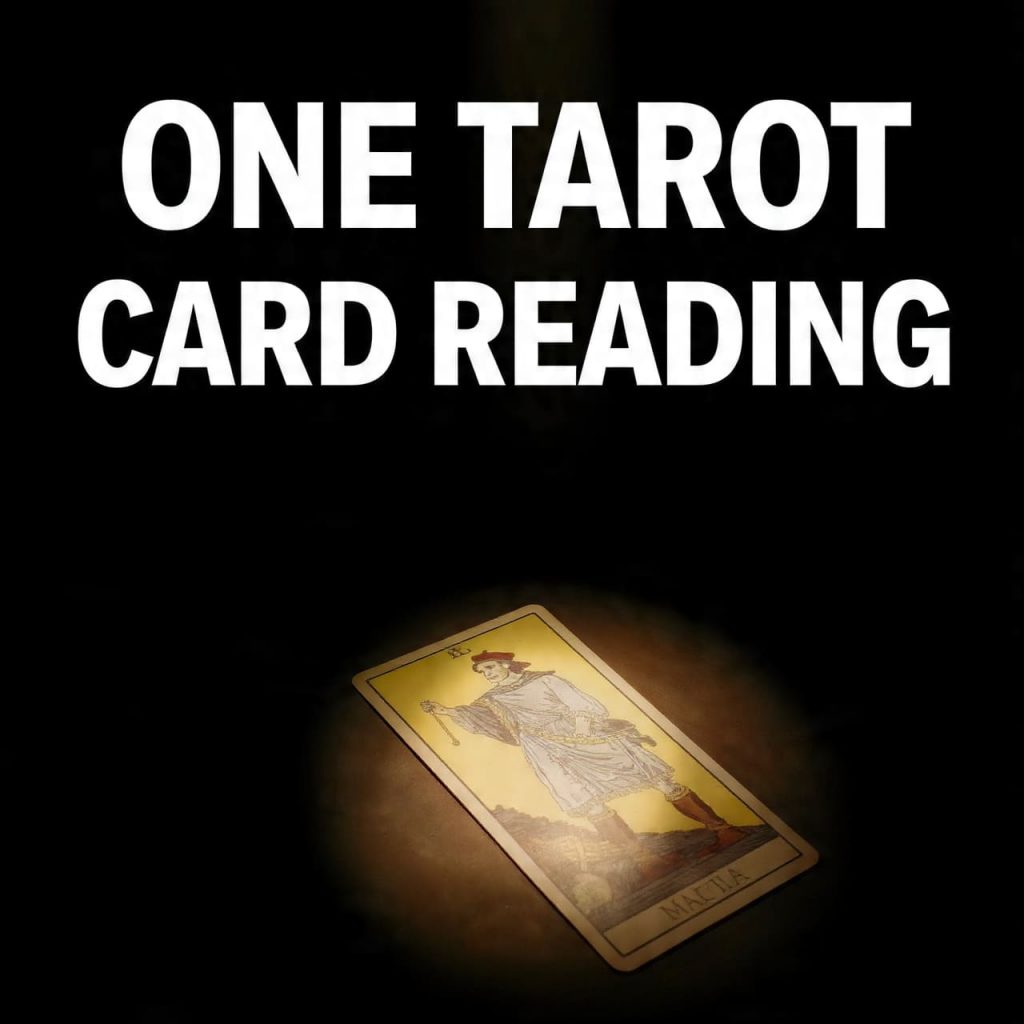
Según los expertos de Astroideal, A one tarot card reading is often regarded as one of the most focused and accessible ways to engage with tarot. By drawing and interpreting a single card, the reading emphasizes clarity, reflection, and intention without the complexity of larger spreads. Many believe this format is particularly effective when someone wants quick insight or a moment of pause rather than an in-depth analysis.

💜 Need a clear answer right now?
CONSULT THE YES OR NO TAROT Free · No registration · Instant resultPractitioners suggest that working with one card encourages mindfulness. With fewer symbols to interpret, attention naturally shifts toward nuance, intuition, and personal resonance. This simplicity makes one-card readings popular among beginners as well as experienced tarot users who value concise guidance.
This article provides a detailed and balanced exploration of one tarot card reading. It explains how the format works, when it is most useful, its benefits and limitations, and how to approach it responsibly. The focus remains informative and credible, emphasizing reflection over prediction.
What Is a One Tarot Card Reading?
Core concept and intention
A one tarot card reading involves drawing a single card from the deck and interpreting its meaning in relation to a specific question or theme. Many believe the power of this format lies in its focus. With only one symbol to explore, the reading often feels direct and easier to integrate into daily reflection.
Practitioners suggest that one-card readings work best when the intention is clear. Rather than asking broad or multi-layered questions, individuals are encouraged to focus on a single aspect of a situation, such as guidance for the day or insight into a specific challenge.
Why one card can be enough
Some people assume that more cards automatically mean more insight. However, many practitioners believe that a single card can offer substantial depth. Tarot imagery is layered with symbolism, and exploring one card thoroughly can reveal multiple perspectives.
This approach also reduces the risk of overinterpretation. By limiting the spread, individuals are less likely to search for meaning that is not relevant, supporting a grounded and thoughtful experience.
Common uses for one-card readings
One-card readings are often used for daily reflection, quick check-ins, or clarifying a moment of uncertainty. They are also popular as learning tools, helping individuals become familiar with card meanings and symbolism without feeling overwhelmed.
How One Tarot Card Readings Are Conducted
Setting intention and focus
Most one-card readings begin with intention. Practitioners suggest taking a brief moment to clarify the purpose of the reading, whether it is seeking guidance, reflection, or awareness. This step helps align interpretation with personal relevance.
Intention setting may include silent reflection, writing down a question, or simply holding the theme in mind while shuffling the deck.
Drawing and interpreting the card
Once the card is drawn, interpretation begins. This often involves considering the card’s traditional meaning, imagery, and emotional tone. Many believe personal reaction to the card is just as important as textbook definitions.
Using strategies explained in instant tarot for clearer questions can enhance this process by ensuring the card is interpreted within a well-defined context.
Reflection after the reading
After interpretation, practitioners often recommend a short reflection period. This may involve journaling or simply considering how the card’s message applies to current circumstances. Reflection helps integrate insight rather than treating the reading as a standalone answer.
Benefits of One Tarot Card Readings
Key advantages many people note
One tarot card readings are widely appreciated for their simplicity and accessibility.
- Easy to perform without prior experience
- Quick and time-efficient
- Encourages focused reflection
- Reduces confusion from multiple interpretations
Many believe these advantages make one-card readings especially suitable for daily or routine use.
Emotional and reflective value
From a reflective standpoint, one-card readings can function as prompts for self-awareness. The card often acts as a mirror, highlighting emotions or themes that may already be present but unacknowledged.
Practitioners suggest paying attention to emotional reactions to the card, as these responses often reveal personal priorities or concerns.
Learning and skill development
For those learning tarot, one-card readings provide a manageable way to study symbolism and meanings. Repeated exposure to individual cards over time helps build familiarity and confidence.
One Card Reading Compared to Other Tarot Formats
One card versus multi-card spreads
The main difference between one-card readings and larger spreads is depth versus focus. One card emphasizes immediacy and clarity, while multi-card spreads provide context and relationships between factors.
The table below outlines common distinctions.
| Aspect | One Card Reading | Multi-Card Reading |
|---|---|---|
| Number of cards | One | Three or more |
| Depth | Focused | Broader context |
| Time required | Very short | Moderate to long |
| Best for | Daily insight, clarity | Complex situations |
Free versus guided readings
Many one-card readings are done independently or through automated tools. Guided sessions may include explanation and dialogue, adding context to interpretation. Even qualified professionals sometimes recommend one-card readings as entry points before deeper sessions.
Integrating with other reflective tools
Some people combine one-card tarot readings with practices such as journaling, meditation, or horoscope insights. This combination can support broader self-reflection while keeping each practice distinct.
Digital and Remote One Card Readings
Online accessibility
One-card readings are widely available through online tarot sessions and digital platforms. These tools often provide instant results, making them convenient for quick reflection.
Many believe digital access has made tarot more inclusive, allowing individuals to engage privately and at their own pace.
Video-based interpretations
Some practitioners offer one-card readings through video readings. This format allows visual explanation of the card’s imagery, which some find helpful for understanding symbolism.
Video formats can also create a sense of connection, even in brief sessions.
Phone-based formats
Others prefer phone readings, where interpretation is communicated entirely through conversation. Practitioners suggest this approach emphasizes listening and reflection without visual distractions.
One Card Readings for Specific Themes
Emotional and relationship-focused questions
One-card readings are often used to explore emotional themes. When questions center on relationships, some individuals incorporate the practice alongside broader love tarot readings for additional context.
In one-card formats, relationship questions are usually framed reflectively, focusing on personal perspective rather than predicting another person’s actions.
Personal growth and daily guidance
Daily one-card readings are popular for personal growth. Drawing a card each morning can serve as a theme or reminder for the day, encouraging mindfulness and intentional behavior.
Practitioners suggest treating daily cards as prompts rather than instructions.
Choosing credible guidance
When seeking interpretation beyond personal practice, many people value transparency and experience. Working with reliable readers can help ensure interpretations remain ethical and grounded.
Preparing for a Meaningful One Card Reading
Framing effective questions
Clear questions support clearer interpretation. Practitioners suggest focusing on “what” or “how” questions rather than seeking fixed outcomes.
For example, “What should I be aware of today?” often works better than “Will today go well?”
Creating a focused environment
A quiet, comfortable setting can help maintain attention. Even brief pauses before drawing the card may improve focus and reduce impulsive interpretation.
Using strategies explained in instant tarot for clearer questions can further support meaningful engagement.
Simple steps many practitioners recommend
Before a one-card reading, consider the following.
- Pause and clarify your intention
- Shuffle with focus rather than haste
- Observe both imagery and emotion
- Reflect before drawing conclusions
These steps emphasize mindfulness over immediacy.
Frequently Asked Questions
How long does a one tarot card reading take?
Most one-card readings take only a few minutes. Reflection afterward may extend the experience.
Are one-card readings accurate?
Accuracy is subjective and often measured by personal relevance rather than factual certainty.
Can beginners use one-card readings?
Yes, this format is widely considered beginner-friendly and accessible.
Is one card enough for serious questions?
It can offer perspective, but complex issues may benefit from broader exploration.
Can one-card readings be done daily?
Many people use them daily for reflection, provided they avoid overreliance.
Do I need special tools?
A standard tarot deck is sufficient. Some people also use journals for reflection.
Can one-card readings be done online?
Yes, they are commonly offered through digital and remote formats.
Conclusion
A one tarot card reading offers a focused and accessible way to engage with tarot symbolism. Many believe its strength lies in simplicity, encouraging reflection without overwhelming interpretation. When approached responsibly, it can support self-awareness, daily mindfulness, and intentional decision-making.
By understanding how one-card readings work, recognizing their limitations, and framing clear questions, individuals can use this format as a practical reflective tool. Whether practiced independently or with guidance, one tarot card reading remains a concise yet meaningful way to explore insight through symbolism.
One Tarot Card Reading: What Each Major Arcana Card Reveals
| Card | Core Message | Best Question for This Card | Action It Suggests |
|---|---|---|---|
| The Fool | New beginning; leap of faith required | Is now the right time to start? | Take the first step without a perfect plan |
| The High Priestess | Trust your intuition; silence holds answers | What do I already know that I’m ignoring? | Go inward before seeking external guidance |
| The Chariot | Move forward with focused willpower | Should I push through or give up? | Commit fully to the chosen direction |
| Justice | Truth, fairness, and balanced assessment | Am I seeing this situation clearly? | Evaluate facts without emotional distortion |
| The Star | Hope, renewal, and healing after difficulty | Will things improve? | Rest, restore, and trust the process |
| Judgement | A moment of awakening or important evaluation | What is calling me toward a new chapter? | Answer the call; release what no longer serves |
Single Card Reading: Best Questions by Life Area
| Life Area | Effective Single-Card Question | How to Interpret the Card | Follow-Up Action |
|---|---|---|---|
| Love | What is the current energy between us? | Cups = emotional; Swords = tension; Wands = passion | Act on the card’s dominant energy |
| Career | What do I most need to focus on professionally right now? | Pentacles = practical; Chariot = direction | Apply the card’s message to this week |
| Personal growth | What does my higher self want me to know today? | Major Arcana = deeper lesson | Carry the message through the day |
| Decision | What is the most important thing to consider about this choice? | Any suit points to a specific dimension | Weigh this factor in your final decision |
| Daily guidance | What energy should I embody today? | Upright = full expression; reversed = internal version | Look for where this energy is needed |
Limitations of this interpretation
No tarot reading is universal or deterministic. Card meanings shift according to personal context, emotional state, and the specific question asked.
Use this guide as a starting point for reflection, not as absolute truth. For major life decisions, consider consulting a professional tarot reader for personalized guidance.
Preguntas frecuentes
¿What is a one tarot card reading and how does it work?
A one-card tarot reading involves drawing a single card with a focused question in mind and interpreting its symbolism as the primary guidance. Despite its simplicity, a single-card reading can provide profound insight because the focused format allows deep engagement with one message.
¿Is a single card tarot reading accurate?
Yes, often more so than multi-card spreads for certain questions. A single card forces both reader and querent to engage deeply with one core message rather than spreading attention across many cards. For daily guidance and yes-or-no questions, it is highly effective.
¿How do I do a one-card tarot reading?
Sit quietly, hold your question clearly in mind, shuffle your deck until it feels right to stop, and draw the top card. Look at the image first — what does it make you feel? Then consider the traditional meaning and how it applies to your specific question.
¿What questions work best for a one-card tarot reading?
Single-card readings work best for focused questions: ‘What do I need to know about this situation?’, ‘What energy should I bring to today?’, ‘What is the most important factor in this decision?’, or simple yes-or-no questions. Open-ended life questions (‘What should I do with my life?’) need more cards.
¿What does a reversed card mean in a one-card reading?
A reversed card in a single-card reading inverts or internalizes the card’s energy. The Chariot reversed, for example, suggests that the willpower and direction are blocked or need to be directed inward rather than outward. Some readers choose not to use reversals in single-card readings; either approach is valid.
¿Can I do a one-card reading every day?
Yes — daily one-card draws are one of the most popular and beneficial tarot practices. They deepen your relationship with the deck, build interpretive skill, and provide a daily reflective anchor. Keep a journal of your daily card to track patterns over time.
¿What is the difference between a one-card reading and a three-card spread?
A one-card reading provides a single focused message — ideal for daily guidance or simple questions. A three-card spread provides narrative context: past-present-future, or situation-action-outcome. Use one card for clarity; use three when context matters.
¿How long does a one-card tarot reading take?
A genuine one-card reading takes 5 to 15 minutes — time to sit with the card, observe its imagery, connect it to your question, and draw a clear meaning. Rushing through in 30 seconds produces less useful insights. The depth comes from unhurried engagement.
¿Should I use my gut feeling or the traditional meaning for a one-card reading?
Ideally both. Start with your immediate gut reaction to the card’s image — what does it evoke in you? Then layer in the traditional meaning. Where these two perspectives overlap or create interesting tension is often where the most useful insight lives.
¿What if the one card I draw doesn’t make sense for my question?
Consider it an invitation to look deeper. A card that seems unrelated often points to an angle of the question you haven’t considered. Sit with the disconnection and ask: what would this card say if it were answering my question in an unexpected way? This reframe often reveals the insight.
¿Can I ask the same question again with a different one-card draw?
Resist the temptation. Drawing again on the same question reflects dissatisfaction with the first answer rather than genuine new inquiry. Write down your first card’s message, sit with it for 24 hours, and return to it the next day with fresh eyes before drawing again.
Related articles
Need clarity today? Connect with our expert tarot readers at Astroideal.
