

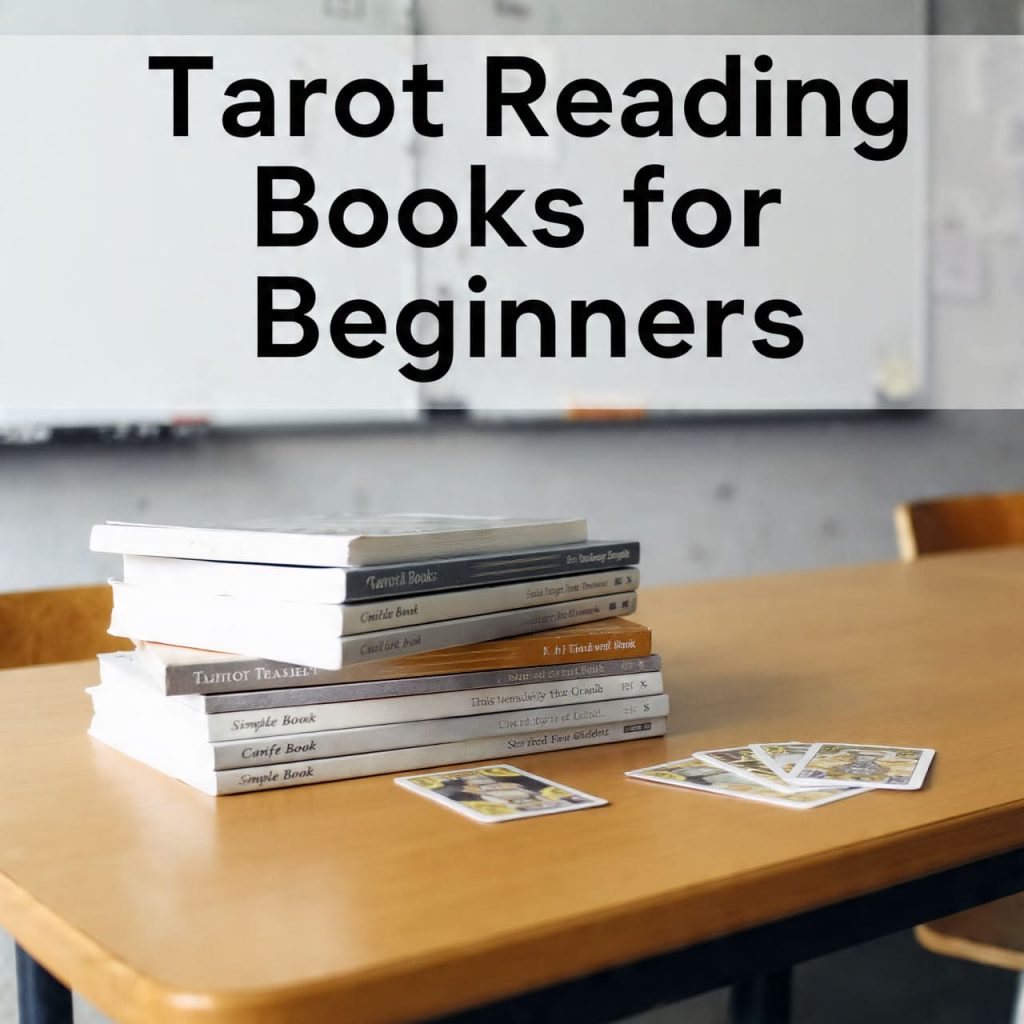
Tarot often appears mysterious from the outside—filled with unfamiliar symbols, layered meanings, and abstract language that can feel intimidating to newcomers. For beginners, tarot reading books provide the most grounded entry point into this symbolic system. A well-written beginner tarot book does not promise psychic power or instant certainty. Instead, it teaches how to observe patterns, interpret imagery, reflect on emotions, and connect meaning to real-life situations with clarity and balance.

💜 Need a clear answer right now?
CONSULT THE YES OR NO TAROT Free · No registration · Instant resultLearning tarot through books builds foundational understanding in a way that apps or short videos often cannot. Books allow slow study, re-reading, personal annotation, and comparison of interpretations. They also expose students to different philosophical approaches—psychological, intuitive, historical, or spiritual—without forcing any single belief system.
For many learners, the first tarot book becomes more than a manual. It becomes a companion in self-reflection and personal growth.
Why Beginners Benefit Most from Learning Through Books
Tarot is not just a memorized system of meanings—it is a language of symbolism. Books allow beginners to absorb that language gradually rather than through shortcuts. Some people later pair their learning with symbolic timing reflections such as horoscope insights, but tarot books remain the core educational anchor.
Books teach context: why a card means what it means, how interpretations change based on placement, and how emotional nuance shapes meaning.
What Books Provide That Apps Often Miss
- Historical background of tarot
- Narrative structure of the Major Arcana
- Emotional development through court cards
- The relationship between suits and life themes
- Interpretive flexibility rather than fixed keywords
A Real Beginner Scenario
A student may memorize that the Three of Swords means “heartbreak,” but a book teaches that it can also reflect truth, emotional clarity, or difficult honesty—depending on context. That depth prevents rigid interpretation.
How Tarot Books Teach Structure and Spread Logic
Beyond card meanings, tarot books teach structure: how cards interact with each other in spreads. Many beginners struggle not with single-card definitions, but with how to read combinations. This is where guided frameworks become essential.
Some modern authors also integrate fast-learning frameworks inspired by intuitive systems such as those outlined in instant tarot, which help beginners organize questions more clearly before interpreting cards.
What Beginners Learn from Structured Tarot Books
- How to create meaningful spreads
- How timing affects interpretation
- How energy flows across a spread
- How contradictions reveal inner conflict
Why Structure Prevents Confusion
Without structure, beginners often read cards in isolation. Books teach that tarot works as a conversation between symbols rather than a sequence of unrelated messages.
Emotional Growth and Self-Reflection Through Tarot Study
Many people approach tarot out of curiosity, but stay because of its reflective power. Tarot books guide readers through emotional awareness, personal accountability, and internal dialogue. Beginners quickly discover that tarot is less about predicting others and more about understanding oneself.
Some readers initially balance book study with online tarot sessions to compare their interpretations with those of experienced readers, but books remain the primary tool for developing independent understanding.
Emotional Skills Tarot Books Help Develop
- Tolerance for uncertainty
- Recognition of repeating emotional patterns
- Awareness of cognitive biases
- Patience with ambiguity
- Responsibility for personal choices
Tarot does not remove uncertainty—it teaches how to sit with it.
Visual Learning and the Importance of Card Imagery
Tarot is an intensely visual system. Good beginner books reproduce card imagery, analyze symbolic details, and explain why certain visual elements matter. This visual literacy strengthens intuitive connection far more than memorizing keywords.
Some learners choose to complement visually focused book study with video readings to observe how experienced readers interpret imagery in real time.
Why Visual Interpretation Matters
- Symbols operate at subconscious levels
- Imagery bypasses rigid logic
- Emotional reactions to images guide interpretation
- Visual storytelling strengthens intuition
Quiet Study, Privacy, and Independent Tarot Learning
One of the advantages of learning tarot through books is privacy. Beginners can explore emotional questions without exposure, performance pressure, or judgment. This quiet autonomy mirrors why some people later prefer reflective learning through formats like phone readings, where emotional work remains contained and personal.
Who Often Thrives with Book-Based Learning
- Introverts
- Highly analytical thinkers
- Spiritually curious but skeptical learners
- People processing sensitive life transitions
Books allow reflection without audience.
Love, Relationships, and Early Tarot Interpretation
Many beginners are drawn to tarot through relationship questions. Love-themed interpretations often feel emotionally immediate and relatable. Some learners explore this area further through love tarot readings, but books teach the deeper emotional patterns behind relational questions.
What Beginners Often Learn About Relationship Tarot
- Attraction versus attachment
- Emotional boundaries
- Communication patterns
- Conflict catalysts
- Healing through honesty
Books prevent beginners from reducing love tarot to wish fulfillment.
Ethics, Responsibility, and Beginner Misinterpretations
New tarot readers are especially vulnerable to fear-based or absolute interpretations. Quality beginner books emphasize emotional responsibility and ethical restraint. As learners grow, many seek perspectives from qualified professionals to compare grounded approaches with their own developing intuition. Others consult reliable readers when unsure how to handle emotionally sensitive interpretations.
Ethical Foundations Good Beginner Books Teach
- Tarot reflects possibilities, not fate
- Fear should never drive interpretation
- Personal agency always remains central
- Emotional safety matters more than drama
Ethics protects both the reader and the querent.
What Beginners Typically Learn First from Tarot Books
| Learning Area | What the Student Develops |
|---|---|
| Major Arcana | Life stages and identity shifts |
| Minor Arcana | Daily challenges and emotions |
| Court Cards | Personality dynamics |
| Spreads | Structured interpretation |
| Intuition | Symbolic sensitivity |
Key Benefits of Learning Tarot Through Books
- Builds deep symbolic literacy
- Encourages independent interpretation
- Supports emotional self-reflection
- Strengthens intuitive awareness
- Prevents dependence on fixed meanings
Frequently Asked Questions
Do beginners need to memorize all tarot card meanings?
No. Understanding symbolism and emotional context matters more than memorization.
How long does it take to become comfortable with tarot reading?
Most beginners feel basic confidence after a few months of regular study.
Are tarot books better than apps for learning?
Books offer deeper structure and context, while apps favor quick access.
Should beginners start with one book or multiple?
One solid foundational book is enough to begin.
Do tarot books require spiritual belief?
No. Many readers treat tarot as a psychological and symbolic tool.
Conclusion
Tarot reading books for beginners offer more than instruction—they offer a relationship with symbolism, emotional awareness, and reflective thinking. Through books, learners gain far more than card meanings. They gain patience, discernment, ethical grounding, and the ability to explore uncertainty without fear.
Whether approached as a spiritual system, a symbolic language, or a reflective practice, tarot study through books builds confidence slowly and responsibly. Real mastery does not arrive through shortcuts—it grows page by page, question by question, and insight by insight.
Best Tarot Books for Beginners: Compared
| Book | Author | Approach | Best For |
|---|---|---|---|
| The Creative Tarot | Jessa Crispin | Creative and literary interpretation | Writers and artists |
| Tarot for Everyone | Karen Mahony | Clear, comprehensive card guide | Total beginners |
| Holistic Tarot | Benebell Wen | Scholarly, exhaustive | Serious students wanting depth |
| 78 Degrees of Wisdom | Rachel Pollack | Psychological and esoteric | Those seeking symbolic depth |
| Learning the Tarot | Joan Bunning | Systematic and accessible | Methodical self-study learners |
| The Ultimate Guide to Tarot | Liz Dean | Visual, user-friendly reference | Visual learners and quick reference |
What Beginner Tarot Books Should Cover
| Topic | Why It Matters | Signs of Good Coverage |
|---|---|---|
| Major Arcana meanings | Foundation of all tarot interpretation | Both upright and reversed, with examples |
| Minor Arcana by suit | Covers 56 of 78 cards | Elemental associations and daily life contexts |
| Spreads for beginners | Practical application | 3-card and Celtic Cross clearly explained |
| Developing intuition | Beyond book definitions | Exercises for intuitive reading practice |
| Reading for yourself | Most common beginner use | Specific guidance on self-reading challenges |
| Ethics of reading | Foundation for responsible practice | Clear guidelines on what tarot can/cannot do |
Limitaciones de esta interpretación
El tarot es una herramienta de autoconocimiento y reflexión, no un sistema de predicción infalible del futuro. Cada lectura refleja las energías presentes en el momento de la consulta y puede cambiar con tus decisiones.
Para decisiones importantes, consulta siempre con un tarotista certificado. Esta guía tiene carácter orientativo y no reemplaza el asesoramiento profesional personalizado ni el apoyo psicológico cuando sea necesario.
Preguntas frecuentes
¿What are the best tarot books for beginners?
The best beginner tarot books combine clear card meanings, practical spread guidance, and exercises for developing intuition. Top recommendations include Joan Bunning’s ‘Learning the Tarot’ for systematic study, Rachel Pollack’s ’78 Degrees of Wisdom’ for depth, and Liz Dean’s ‘Ultimate Guide to Tarot’ for visual learners.
¿Should I start with a book or a class to learn tarot?
Both are valid. A good tarot book offers self-paced learning at low cost. A class provides community, real-time feedback, and accelerated learning. Many beginners start with a book alongside their first deck, then take a class when they want structured feedback.
¿How long does it take to learn tarot from a book?
Knowing the basic meanings of all 78 cards takes most dedicated learners 2-4 months of consistent daily practice. Developing genuine reading fluency takes 1-2 years. The journey of deepening interpretation continues indefinitely with experience.
¿Which tarot book is best for learning the Rider-Waite-Smith deck?
‘Learning the Tarot’ by Joan Bunning is specifically designed around the Rider-Waite-Smith deck and is universally recommended for beginners using this foundational deck. It includes exercises and is available free on the author’s website.
¿Are online resources as good as tarot books for beginners?
Online resources provide breadth and accessibility; books provide depth, coherence, and a systematic framework. A quality beginner’s book gives you a complete, structured approach that scattered online content rarely replicates. Both work best together.
¿What is ’78 Degrees of Wisdom’ and is it suitable for beginners?
Rachel Pollack’s ’78 Degrees of Wisdom’ is a classic, deeply symbolic exploration of all 78 tarot cards. It’s accessible to motivated beginners but rewards those with some background. It’s one of the most intellectually rich and enduring tarot books ever written.
¿Do I need to memorize all 78 card meanings before I can do readings?
No. Start with the Major Arcana and basic suit associations. Many experienced readers continue to work intuitively alongside memorized meanings throughout their practice. The goal is fluency, not memorization — and fluency comes from practice, not just reading books.
¿What’s the difference between a tarot guidebook and a full tarot book?
A guidebook (typically included with a deck) gives brief meanings for each card. A full tarot book explores the history, symbolism, psychological associations, and reading techniques in depth. For serious learning, a dedicated book is far more valuable than a deck’s brief guide.
¿Should a beginner buy multiple tarot books?
Start with one solid book matched to your learning style. Once you’ve worked through it completely (3-6 months), add a second with a different approach. Breadth comes later; depth from one quality resource first is more valuable than scattered knowledge from many.
¿What books help develop tarot intuition beyond card meanings?
Books like ‘The Complete Guide to the Tarot’ by Eden Gray, ‘The Tarot Reader’s Study Course’ by Josephine Ellershaw, and Mary K. Greer’s ‘Tarot for Your Self’ specifically emphasize developing intuitive reading skills beyond memorized definitions.
¿Can children learn tarot from beginner books?
Age-appropriate tarot books exist for teenagers. For younger children, oracle card decks designed for kids are more appropriate than traditional tarot, which contains complex and sometimes challenging imagery. Adult beginner books are best started at 16 and above.
Artículos relacionados
¿Quieres una lectura de tarot personalizada? Consulta con nuestros expertos en Astroideal.
