

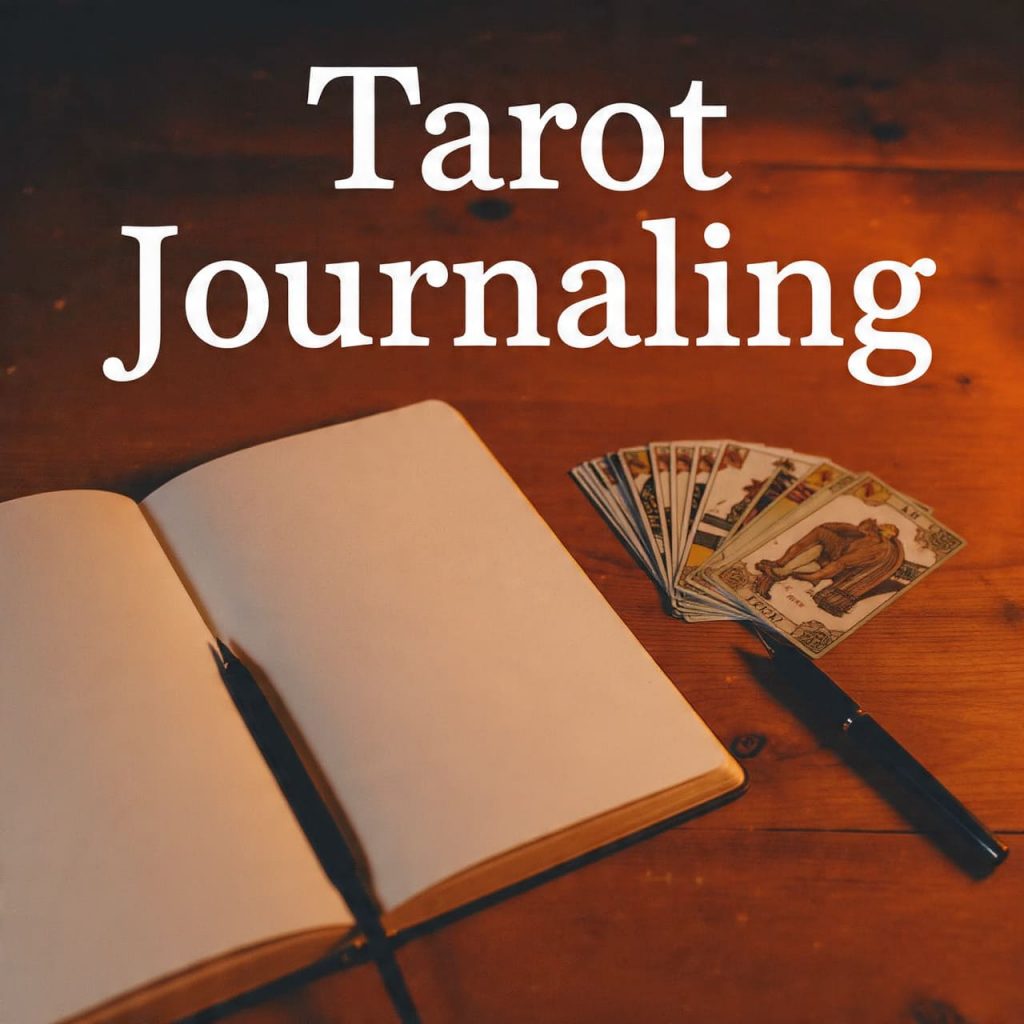
Tarot journaling is one of the most powerful tools for deepening your relationship with the cards. Many believe that writing about tarot readings strengthens intuition, emotional clarity, and symbolic understanding. Practitioners suggest that journaling transforms tarot into a reflective practice, helping individuals track insights, notice patterns, and cultivate personal growth over time.

💜 Need a clear answer right now?
CONSULT THE YES OR NO TAROT Free · No registration · Instant resultJournaling becomes significantly more meaningful when the initial question is intentional and focused. Some readers shape their questions using symbolic strategies similar to those explained in signs Tarot, which helps bring clarity before writing begins. A clear prompt often leads to deeper, more insightful journaling sessions.
Why Tarot Journaling Matters
Writing Strengthens Intuition
Many believe that writing allows intuitive impressions to unfold more organically. Journaling helps capture subtle thoughts that might be overlooked in the moment of a reading. Practitioners often recommend this method to enhance self-awareness, especially when combined with reflective guidance from qualified professionals.
Journaling Tracks Emotional and Symbolic Patterns
Tarot journaling reveals long-term patterns in emotions, decision-making, and recurring card themes. Many people find that observing these patterns enhances emotional intelligence, especially when readings involve relational themes similar to those explored in structured love tarot readings.
Writing Supports Mind-Body Insight
Tarot journaling encourages slowing down and exploring how images, numbers, and colors evoke emotional responses. Practitioners suggest this promotes clearer, more grounded interpretations.
The Foundations of Tarot Journaling
Choosing the Right Format
Some individuals prefer handwritten journals, while others use digital tools. Many believe handwriting deepens intuitive processing, though both formats work well. People often choose what aligns with lifestyle and comfort, particularly when journaling alongside insights discussed in online tarot sessions.
Creating a Consistent Practice
Consistency leads to growth. Even brief daily or weekly entries help build a strong reflective foundation. Practitioners emphasize that the goal is not perfection—just honest expression.
Setting the Tone for Each Entry
Intention-setting helps focus the journal entry. Whether you’re exploring emotional clarity, personal development, or relationship dynamics, intention guides the direction of your writing and your interpretation.
Methods of Tarot Journaling
The Daily Draw Method
This popular method involves pulling one card each day and reflecting on its message. Many believe it improves symbolic fluency and intuitive trust. Journaling about your morning impressions and evening reflections helps track emotional and energetic patterns.
The Question-Based Method
This method focuses on targeted reflection. Practitioners suggest using clear, structured questions such as:
- What energy surrounds me today?
- What am I being guided to understand?
- What internal shift may benefit me?
This approach aligns well with thoughtful exploration often supported through detailed video readings.
The Spread Reflection Method
This method involves writing about multi-card spreads such as Celtic Cross or three-card layouts. Many believe writing helps organize complex symbolism and track nuanced insights.
Tarot Journaling Prompts for Personal Growth
Self-Discovery Prompts
- What aspect of myself does this card reflect?
- What is my emotional reaction to this imagery?
- Where do I feel resistance or openness?
Relationship Prompts
- What relational pattern does this card highlight?
- What supports connection, and what needs healing?
These prompts mirror themes often explored intimately in guided phone readings.
Career and Purpose Prompts
- What supports my motivation today?
- What might strengthen my sense of direction?
Spiritual Growth Prompts
- What wisdom is emerging from this card?
- How does this card align with my inner truth?
Major Arcana Journaling Themes
The Fool
Prompts around new beginnings, courage, and openness. Many believe journaling about The Fool encourages trusting one’s instincts.
The High Priestess
This card inspires writing focused on intuition and hidden knowledge. Practitioners suggest journaling with this card deepens spiritual self-awareness.
Death
This card encourages reflection on transformation, release, or personal evolution. Many readers find journaling about Death supports emotional clarity during significant life transitions.
The Star
Journaling with The Star focuses on hope, healing, and renewal. These concepts often resonate with reflective symbolism explored by thoughtful reliable readers.
Minor Arcana Journaling Themes
Wands: Creativity and Passion
Journaling with Wands often explores motivation, inspiration, and bold action. Many believe this suit helps uncover blocked energy or untapped creative potential.
Cups: Emotions and Relationships
Cups journaling encourages emotional clarity, healing, and connection. Practitioners emphasize paying attention to intuitive reactions to imagery.
Swords: Thought Patterns and Clarity
Swords are ideal for journaling about mental habits, communication, boundaries, or resolving conflict.
Pentacles: Grounding and Practical Growth
Pentacles promote journaling about finances, structure, health, and long-term planning. Many people explore these areas while engaging with structured insights from horoscope insights.
How to Build a Meaningful Tarot Journal
Create Sections or Themes
Categorize entries by theme such as:
- Daily reflections
- Relationship insights
- Career and purpose
- Emotional healing
Track Card Frequencies
Many believe that noticing recurring cards reveals deeper narratives unfolding in one’s life.
Include Drawings or Symbols
Some individuals sketch images, symbols, or keywords to reinforce learning.
Record Questions, Interpretations, and Outcomes
This method highlights how your interpretations evolve and how readings align with real experiences.
Tarot Journaling Spreads
Reflection Spread
This spread explores what you learned, what you’re releasing, and what you’re embracing. Practitioners suggest using this spread weekly or monthly.
Emotional Insight Spread
This spread reveals emotional needs, challenges, and supportive energies. It works especially well when combined with emotional processing techniques similar to those explored in signs Tarot.
Growth Path Spread
This spread helps identify obstacles, opportunities, and strengths along your personal path.
Using Tarot Journaling for Healing
Processing Emotions
Journal entries help transform emotional confusion into clarity. Many believe this practice supports self-compassion.
Identifying Limiting Beliefs
Swords cards often highlight internal blocks. Writing about them helps reveal areas where mindset shifts are needed.
Releasing Past Experiences
Journaling encourages gentle exploration of what needs to be forgiven, understood, or released.
Strengthening Self-Trust
The more you write, the more your intuitive voice strengthens.
Tarot Journaling for Manifestation
Clarifying Desires
Writing about manifestation cards helps identify what you truly want. This often clarifies emotional alignment.
Tracking Progress
Weekly or monthly entries reveal how your goals evolve.
Blending Insight with Action
Practitioners believe that journaling strengthens intention by pairing symbolism with practical steps, similar to reflective prompts used in structured online tarot sessions.
Table: Tarot Suits and Suggested Journaling Questions
| Suit | Journaling Focus | Example Question |
|---|---|---|
| Wands | Purpose & creativity | What inspires action today? |
| Cups | Emotional awareness | What am I feeling beneath the surface? |
| Swords | Thought clarity | What belief needs re-evaluation? |
| Pentacles | Practical matters | What grounded step can I take next? |
Tips for Effective Tarot Journaling
- Journal without judgment—let thoughts flow
- Revisit old entries to observe personal growth
- Write in detail rather than relying on keywords
- Combine intuition with structured interpretation
- Use prompts when you feel blocked
- Allow your journal to evolve naturally
Steps for Starting a Tarot Journaling Practice
- Choose a notebook or digital format.
- Set a clear intention for your journaling habit.
- Draw a card or pull a spread.
- Describe your impressions without overthinking.
- Reflect on feelings, symbols, and personal meaning.
- Revisit entries weekly to observe patterns.
Common Mistakes in Tarot Journaling
- Writing only predictions instead of reflections
- Using journal entries to judge yourself
- Being inconsistent and losing momentum
- Relying solely on guidebook meanings
- Forcing interpretations instead of observing them
Conclusion
Tarot journaling is a reflective, grounding practice that deepens intuition, emotional clarity, and symbolic understanding. Many believe that writing about tarot readings strengthens the connection between insight and real-life experience. Practitioners suggest that journaling not only enhances tarot skills but also supports personal growth, healing, and mindful awareness.
By exploring emotions, recording intuitive impressions, tracking patterns, and observing long-term evolution, tarot journaling becomes a powerful companion on any reflective journey. Whether used daily, weekly, or during moments of transition, journaling helps transform tarot into a living practice—one that evolves alongside you and offers clarity with every page.
How Tarot Journaling Deepens Your Practice
| Journaling Practice | What It Develops | Frequency |
|---|---|---|
| Daily one-card draw + reflection | Card familiarity, pattern awareness | Daily |
| Post-reading notes | Interpretation accuracy tracking | After every reading |
| Monthly review | Long-term pattern recognition | Monthly |
| Dream + tarot correlation | Unconscious symbol work | When dreams are vivid |
| Predictive tracking | Intuitive calibration | Weekly |
Essential Prompts for a Tarot Journal Entry
| Prompt Category | Specific Question | Purpose |
|---|---|---|
| First impression | What was my gut reaction to this card? | Bypasses overthinking |
| Personal connection | What does this card remind me of from my own life? | Makes meanings personal |
| Traditional meaning | How does the standard meaning apply here? | Grounds interpretation |
| Action | What does this card ask me to do or consider? | Translates insight to action |
| Follow-up | How did this card’s message play out? | Builds predictive accuracy |
Limitations of This Interpretation
Tarot is a reflective tool, not a predictive science. Results vary by reader, question, and context. Use these insights as guidance for your own reflection, not as a substitute for professional advice.
For significant life decisions, combine tarot insights with qualified professional guidance in the relevant domain.
Preguntas frecuentes
What is tarot journaling?
Tarot journaling is the practice of recording your card draws, interpretations, and reflections in a dedicated journal to deepen your understanding and track patterns over time.
Do I need to journal to be good at tarot?
Not strictly, but journaling dramatically accelerates development. It creates a personal reference system and helps you notice how your interpretations evolve.
What should I write about after a tarot reading?
Note the cards drawn, your immediate reaction, the interpretation you gave, the question you asked, and later, how the energy unfolded in real life.
Can I use a digital tarot journal instead of paper?
Yes. Apps, digital notebooks, or even voice notes work well. The medium matters less than the consistency of practice.
How long should a tarot journal entry be?
As long as feels right. A daily one-card draw entry might be 3–5 sentences. A full spread reflection might be a full page. There is no right length.
What is a daily one-card draw and why is it powerful?
You draw one card each morning and reflect on its message for the day. At day’s end, you record how it showed up. This simple practice builds pattern recognition rapidly.
Can tarot journaling replace professional readings?
Not entirely. Personal journaling builds your own intuitive practice; professional readings offer an external perspective that self-readings can lack due to personal bias.
How do I use my tarot journal to track prediction accuracy?
Write your interpretation when you draw the card, seal the journal entry, and revisit it a week or month later to assess how accurate your reading was.
Can tarot journaling help with mental health?
The reflective nature of tarot journaling shares many benefits of expressive journaling: clarity, emotional processing, and increased self-awareness. It is not a replacement for therapy.
What should I do when my journal shows I consistently misread certain cards?
Note which cards you struggle with and do a focused study of them — research multiple interpretations, meditate on the imagery, and journal extensively about what they evoke personally.
How does journaling about a professional reading deepen its impact?
Writing your reactions and reflections after a reading with a professional reader deepens the integration of the insights received and extends the value of the session.
Artículos relacionados
Ready for your reading? Connect with an expert at Astroideal — available 24/7.
