

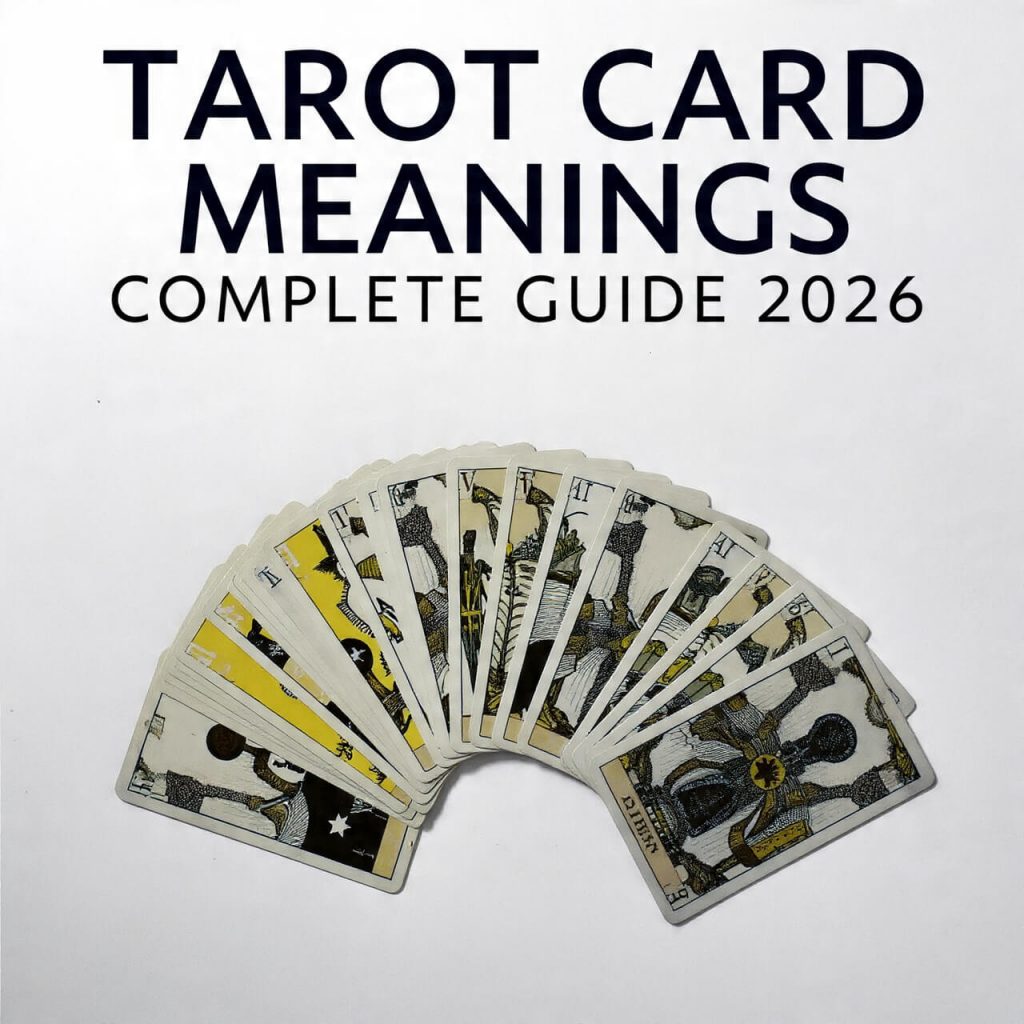
Tarot has captivated spiritual seekers, psychologists, and curious minds for centuries. Each card carries layers of symbolism, archetypal meaning, and practical insight that can guide reflection, decision-making, and personal growth. Many practitioners suggest that understanding tarot card meanings is less about predicting the future and more about exploring your subconscious, identifying patterns, and fostering self-awareness.

💜 Need a clear answer right now?
CONSULT THE YES OR NO TAROT Free · No registration · Instant resultThe 2026 guide to tarot card meanings includes traditional insights, modern interpretations, psychological applications, and practical advice for using tarot in daily life. We also incorporate strategies explained in local tarot options to help frame clear, actionable questions for meaningful readings.
Understanding Tarot Card Meanings
Tarot is divided into Major Arcana and Minor Arcana, each offering distinct insight.
- Major Arcana represents major life lessons, personal archetypes, and transformative experiences.
- Minor Arcana focuses on everyday experiences, challenges, emotions, and decision-making.
Many practitioners emphasize that interpreting cards relies on context: surrounding cards, card positions in a spread, and the reader’s intuition. For love-related insights, love tarot readings often combine Major and Minor Arcana to illuminate relational dynamics.
How Tarot Cards Convey Meaning
Tarot cards work symbolically and intuitively. Each card contains:
- Imagery: Symbols, colors, and objects convey archetypal messages.
- Position: Placement in a spread influences interpretation.
- Reversal: Some readers interpret reversed cards as blocked energy, delay, or internalized traits.
- Context: The surrounding cards and question determine relevance.
Practitioners suggest that consistent practice—combined with journaling and reflection—enhances your ability to read the cards accurately and meaningfully. Many beginners start with online tarot sessions to gain structured guidance.
Major Arcana: Deep Life Lessons
The Major Arcana cards explore themes of personal growth, transformation, and universal archetypes. Understanding their layers can provide insight into long-term challenges and opportunities.
Practical Insights from Major Arcana
- Cards can highlight areas of transformation or growth.
- Major Arcana often appear when a reading addresses significant life changes.
- Repetition of Major Arcana in readings can signal strong internal or external influence.
For structured readings, consulting qualified professionals ensures clarity in interpreting these archetypal messages.
Minor Arcana: Daily Life Guidance
Minor Arcana cards focus on everyday experiences, including emotional challenges, career decisions, and relational dynamics.
- Cups: Emotions, relationships, intuition
- Wands: Creativity, ambition, energy
- Swords: Challenges, intellect, decision-making
- Pentacles: Material, financial, and practical matters
Many practitioners suggest combining Minor Arcana with Major Arcana in a spread for a balanced view of immediate circumstances and long-term influences.
Applying Tarot Card Meanings Practically
Self-Reflection
- Identify emotional patterns using Cups cards
- Track career and goal progression with Wands and Pentacles
- Explore mental clarity and decision-making through Swords
Relationship Insight
- Use love tarot readings to explore compatibility, communication, and emotional needs
- Examine relational challenges through spreads featuring relevant court cards
Decision-Making
- Major Arcana cards highlight overarching lessons or transformative outcomes
- Minor Arcana can offer actionable steps and practical advice
Using spreads thoughtfully—paired with journaling or horoscope insights—enhances understanding and application.
Modern Interpretations in 2026
Modern decks reinterpret traditional symbolism to make tarot more inclusive and emotionally resonant. Many practitioners suggest that modern imagery allows readers to connect intuitively with their emotions and experiences.
- Contemporary decks incorporate diverse cultural representation
- Modern card art may emphasize mindfulness, empowerment, or emotional healing
- Hybrid decks blend traditional symbolism with intuitive design for personal insight
For those learning tarot, strategies explained in local tarot options can help frame clear, specific questions, which improves reading accuracy.
Reading Strategies and Spread Selection
Common Spreads for Interpreting Cards
- Three-Card Spread: Past, Present, Future
- Celtic Cross: Deep analysis of challenges, influences, and outcomes
- Relationship Spread: Focuses on emotional dynamics and relational patterns
Tips for Accurate Interpretation
- Shuffle mindfully with your question in focus
- Use upright and reversed meanings for nuanced insight
- Document readings in a tarot journal for trend tracking
- Reflect on multiple readings to identify recurring patterns
Many practitioners recommend consulting reliable readers or participating in video readings for guidance while developing confidence.
Psychological Insights from Tarot
While tarot is not empirically predictive, research in psychology provides context for its effectiveness:
- Tarot cards facilitate narrative reflection, helping users explore challenges
- Symbolism taps into archetypal thinking and cognitive reflection
- Practicing tarot enhances mindfulness and self-awareness
For beginners or those exploring emotional patterns, remote sessions like phone readings provide structured reflection without pressure.
Deck Recommendations for 2026
- Rider Waite Tarot: Classic symbolism, beginner-friendly
- Modern Witch Tarot: Contemporary and inclusive, intuitive
- Light Seer’s Tarot: Emotional, bright, and empowering
- Wild Unknown Tarot: Minimalist and reflective, supports self-introspection
Selecting a deck that resonates visually and emotionally improves interpretive accuracy and engagement.
Pricing and Options
Table 1: Typical Tarot Reading Costs
| Format | Price Range | Duration |
|---|---|---|
| Online chat | $10–$30 | 10–20 min |
| Video call | $25–$60 | 20–40 min |
| Phone reading | $15–$45 | 15–30 min |
| In-person session | $40–$80 | 30–60 min |
Table 2: Beginner vs Advanced Decks
| Deck | Best For | Complexity |
|---|---|---|
| Rider Waite | Beginners | Low |
| Modern Witch | Intermediate | Medium |
| Light Seer’s | Emotional growth | Medium |
| Wild Unknown | Intuition & reflection | High |
Tips for Mastering Card Meanings
- Study a few cards at a time for depth, not speed
- Journal interpretations and patterns over time
- Practice spreads daily or weekly
- Combine cards with numerology or astrology for additional insight
- Use intuition in combination with traditional meanings
Structured practice ensures deeper understanding and actionable insights.
Benefits of Understanding Tarot Card Meanings
- Enhanced self-reflection and emotional clarity
- Improved decision-making and problem-solving skills
- Better relational awareness and compatibility understanding
- Support for personal growth and mindfulness
- Increased confidence in reading and interpreting cards
By integrating daily or weekly tarot practice with journaling and reflective questioning, many find significant personal benefit.
Common Mistakes to Avoid
- Relying solely on guidebooks without personal interpretation
- Attempting to learn all cards at once
- Asking vague or overly broad questions
- Ignoring the context of surrounding cards in spreads
- Overlooking journaling or reflective follow-up
Avoiding these mistakes ensures more meaningful and reliable readings.
Frequently Asked Questions
Can tarot predict the future?
Tarot is not scientifically predictive. Many practitioners use it as a tool for self-reflection, guidance, and exploring potential outcomes.
Which deck is best for beginners?
Decks like Rider Waite are recommended for clarity and structured symbolism.
Are modern decks better than traditional ones?
Modern decks may resonate more emotionally, while traditional decks provide clear archetypal guidance. Both have value depending on your approach.
Can tarot readings help with personal growth?
Yes, by encouraging reflection, mindfulness, and recognition of patterns in emotions, decisions, and relationships.
How often should I study tarot cards?
Daily or weekly practice is recommended for retaining card meanings and improving interpretive skills.
Do upright and reversed cards have different meanings?
Many practitioners consider reversals to reflect blocked energy, delay, or internalized qualities, adding depth to interpretations.
Are online readings reliable for learning card meanings?
Yes, online sessions and video readings provide structured guidance, especially for beginners.
Conclusion
Understanding tarot card meanings is an ongoing journey. The 2026 complete guide emphasizes depth, context, and practical application over rote memorization. By combining Major and Minor Arcana knowledge with intuition, journaling, and structured practice, tarot becomes a powerful tool for reflection, decision-making, and personal growth.
Whether you use traditional decks for clarity or modern decks for emotional resonance, integrating tarot into daily or weekly practice ensures meaningful insights and empowering self-awareness.
