

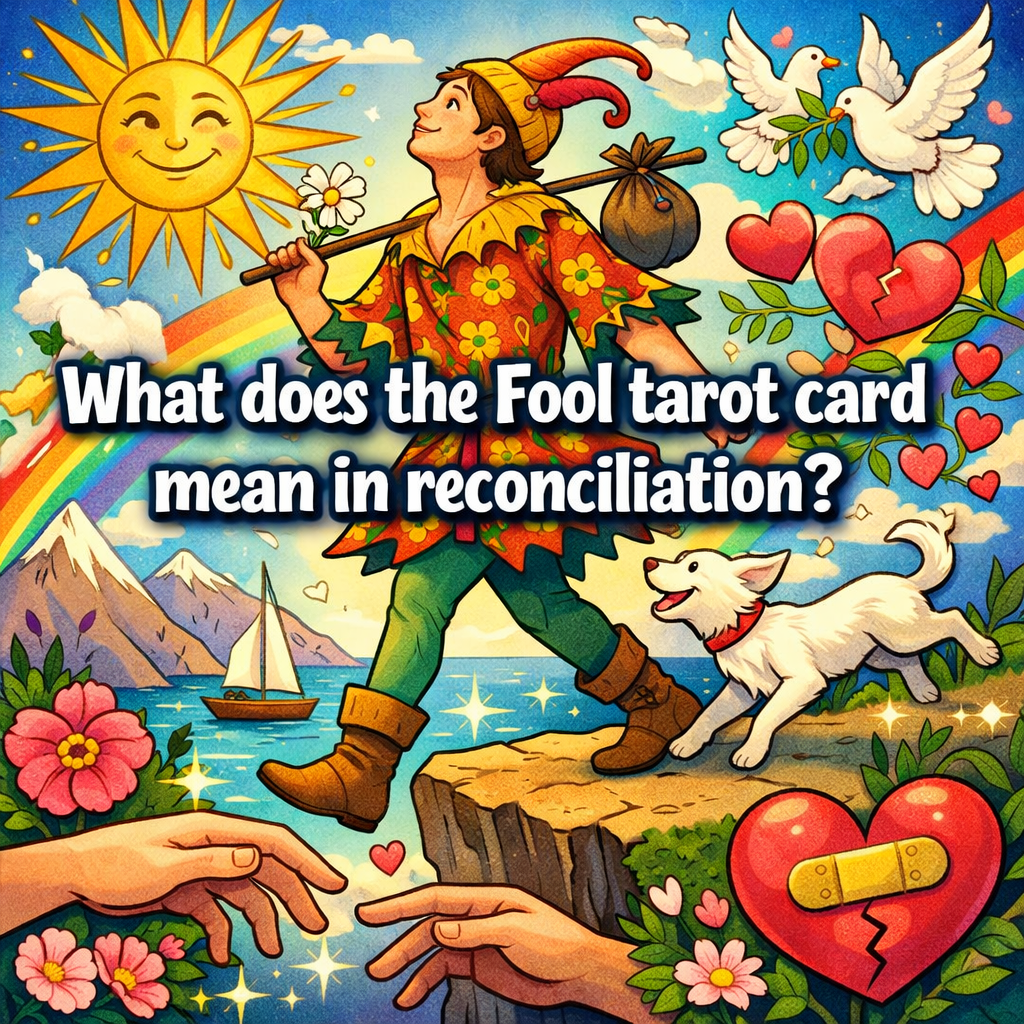
Reconciliation is one of the most delicate topics explored through tarot. When emotions are unresolved and communication feels uncertain, people often turn to symbolic systems to gain perspective rather than prediction. The Fool tarot card, in particular, tends to raise questions because of its association with risk, freedom, and beginnings. Many believe that when this card appears in reconciliation-focused readings, it is less about returning to the past and more about redefining what a renewed connection could become.

💜 Need a clear answer right now?
CONSULT THE YES OR NO TAROT Free · No registration · Instant resultUsing interpretive strategies commonly outlined in analytical resources such as cards meanings, practitioners suggest starting with the Fool’s foundational symbolism before applying it to relationship dynamics. This approach helps frame reconciliation not as an outcome, but as a process that unfolds through awareness and choice.
The Symbolic Foundation of the Fool Card
The Meaning of Zero in Reconciliation Contexts
The Fool is numbered zero, which many practitioners interpret as symbolic of unlimited potential. In reconciliation readings, this number is often associated with emotional neutrality—a space where old narratives can be paused before new ones are written.
Trust, Curiosity, and Emotional Courage
Many believe the Fool represents emotional trust without guarantees. In reconciliation, this may suggest a willingness to engage again without demanding certainty, allowing curiosity to replace defensiveness.
The Journey Rather Than the Destination
Practitioners often emphasize that the Fool represents movement rather than arrival. Applied to reconciliation, this symbolism suggests that rebuilding trust is gradual and requires patience rather than immediate resolution.
Upright Fool in Reconciliation Readings
Openness to a Fresh Emotional Chapter
When the Fool appears upright, many interpret it as a sign that emotional openness is available. This does not necessarily mean reconciliation will occur, but it does suggest that both parties may be more receptive to dialogue and change.
Releasing the Weight of Past Mistakes
The upright Fool frequently points to letting go of accumulated emotional baggage. Practitioners suggest that reconciliation under this influence benefits from addressing the present moment rather than relitigating every past conflict.
Balanced Optimism Without Naivety
Although the Fool is optimistic, it is not inherently reckless. Readers often stress that its energy supports hope combined with awareness, encouraging conscious decision-making rather than impulsive emotional reactions.
Reversed Fool and Reconciliation Challenges
Fear of Repeating Old Patterns
In reversed form, the Fool is commonly associated with hesitation. Many believe this reflects an internal awareness that something still feels unresolved, making reconciliation emotionally risky at this stage.
Resistance to Vulnerability
Practitioners suggest that the reversed Fool may indicate emotional self-protection. In reconciliation readings, this can manifest as avoidance, mixed signals, or reluctance to fully engage.
When Reflection Is More Valuable Than Action
A reversed Fool often shifts the focus inward. Many believe it advises pausing reconciliation efforts until clarity, accountability, and emotional readiness are more firmly established.
How Context Shapes the Fool’s Meaning
The Role of Spread Structure
The Fool’s message can change depending on where it appears in a spread. In advice positions, it often highlights mindset, while in outcome positions it may suggest a new phase rather than a restored past.
Emotional Readiness on Both Sides
Reconciliation is rarely one-sided. Practitioners frequently note that the Fool reflects mutual emotional readiness—or highlights imbalance if one party is more open than the other.
Interpreting the Fool With Professional Insight
Some individuals choose to explore these nuances with qualified professionals who apply ethical frameworks and psychological awareness to tarot interpretation, helping seekers contextualize the Fool’s message without encouraging unrealistic expectations.
The Fool and Modern Relationship Readings
Emotional Themes in Love-Focused Tarot
In relationship contexts, the Fool often appears in love tarot readings when individuals are questioning whether emotional renewal is possible without repeating previous pain. Practitioners suggest the card emphasizes attitude over outcome.
Comparing Interpretive Approaches
Different readers may emphasize different aspects of the Fool—some focusing on freedom, others on risk. Many believe consistency in interpretation improves when symbolism is anchored to the specific question asked.
Choosing a Reader Thoughtfully
Those seeking reconciliation insights often benefit from consulting reliable readers who prioritize reflection and personal agency rather than absolute claims.
Practical Guidance When the Fool Appears in Reconciliation
Steps Often Encouraged by Practitioners
Readers commonly suggest grounding the Fool’s energy through intentional action:
- Reflecting on personal growth since the separation
- Entering conversations with curiosity rather than expectations
- Establishing emotional boundaries while remaining open
Potential Benefits of a Fool-Led Perspective
Many believe this approach can offer meaningful advantages:
- Reduced emotional pressure during reconnection
- Greater honesty in communication
- Increased awareness of personal responsibility
Digital Access to Interpretive Support
With the growth of online tarot sessions, individuals exploring reconciliation now have greater flexibility in choosing when and how they seek insight, without geographical limitations.
Formats, Timing, and Accessibility
Comparing Common Reading Formats
People considering reconciliation often explore multiple formats, including live conversations and recorded interpretations.
| Format | Interaction Style | Common Perception |
|---|---|---|
| Live session | Real-time discussion | Immediate clarity |
| Written reading | Reflective review | Thoughtful pacing |
| Recorded session | Replayable insight | Ongoing reference |
Visual and Voice-Based Options
Some seekers prefer video readings for their personal connection, while others find phone readings more comfortable when discussing emotionally sensitive topics.
Considering Emotional Timing
Practitioners sometimes integrate tarot insights with horoscope insights to reflect on broader emotional cycles. While not predictive, this combination may help individuals understand when reconciliation conversations feel more constructive.
Frequently Asked Questions
How much do reconciliation tarot readings usually cost?
Pricing varies by reader experience and format. Many focused sessions are moderately priced, especially when designed to address a single question.
How long does a reconciliation reading typically last?
Most readings range between 20 and 45 minutes. Practitioners often suggest shorter sessions for emotionally complex topics.
Are reconciliation readings available remotely?
Yes. Many readings are accessible digitally, allowing flexibility and privacy.
How accurate is the Fool card for reconciliation questions?
Accuracy depends on interpretation, context, and personal reflection. Tarot is generally viewed as guidance rather than prediction.
Can tarot determine whether reconciliation will succeed?
Most practitioners avoid absolute outcomes. Tarot is commonly used to explore dynamics and personal readiness.
Is tarot suitable for emotionally sensitive situations?
Many find it helpful for reflection, though it works best alongside honest communication and self-awareness.
Conclusion
The Fool tarot card offers a distinctive perspective in reconciliation readings. Rather than promising reunion or separation, it highlights the importance of mindset, emotional courage, and personal growth. Many believe the card encourages individuals to approach reconciliation as a new journey—one shaped by awareness rather than repetition. When interpreted thoughtfully and responsibly, the Fool can serve as a meaningful guide through the uncertainty that accompanies emotional renewal.
